
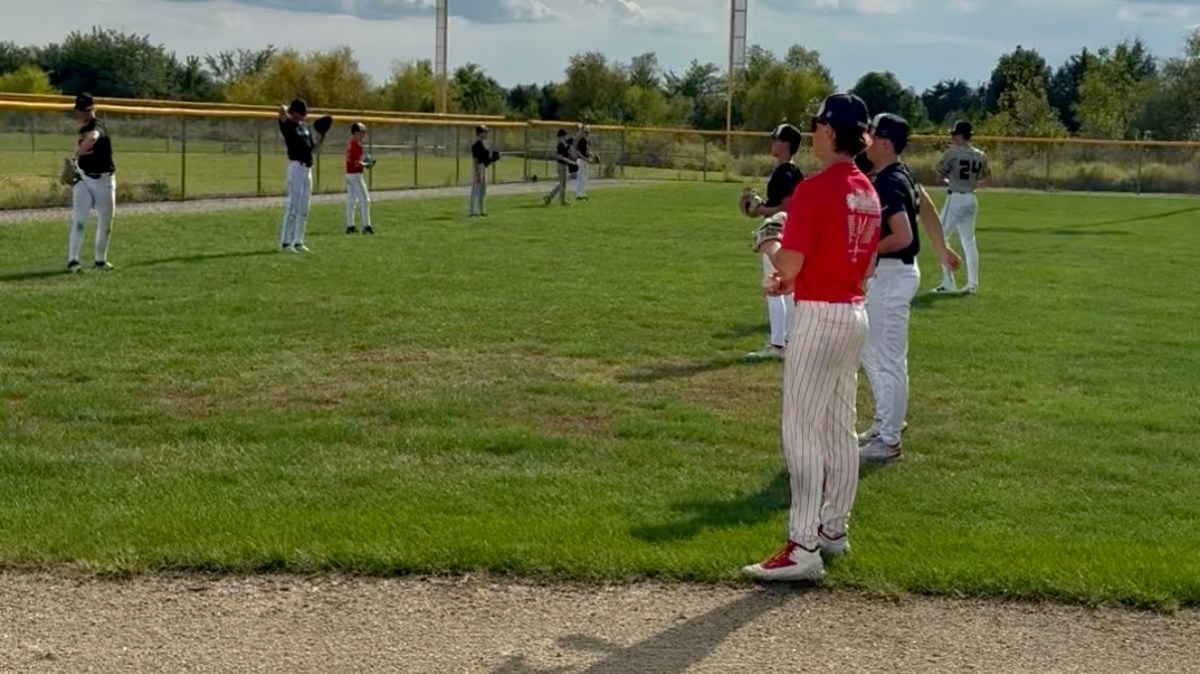
Young baseball players have access to more information than ever before.
A 15-year-old can walk into a facility and know his exit velocity, launch angle, spin rate, vertical break, bat speed and throwing velocity before he knows how to properly execute a rundown. He can work with a hitting instructor to create better launch conditions. He can visit a pitching facility to design a breaking ball. He can follow a velocity program, analyze slow-motion video of his mechanics and post the results on social media for coaches and scouts to see.
And none of those things are inherently bad.
I love this side of baseball. I’m a data nerd. I love pitch design, mechanical development, advanced data and finding ways to use information to make players better. But I think we’ve started trying to optimize baseball players before we’ve finished developing them. And eventually, baseball is going to have to rediscover the value of the fundamentals.
Think about developing a baseball player like building a house.
Fundamentals are the concrete foundation. Strength, athleticism and mechanics build the structure. Analytics, technology and specialized development are the upgrades — the great kitchen, the finished basement and the game room.
Those upgrades can make the house incredible. But if the foundation underneath it is cracked, eventually you’re going to have a problem.
How we got here
It’s not technology’s fault, it’s the culture of the game nowadays. Showcase baseball, social media, scouts, they all reward measurable, visible tools:
Velocity. Spin rate. Movement profiles. Exit velocity. Bat Speed. Home runs.
Those things are easily measured, posted, compared and recruited.
It’s much harder to make an Instagram clip out of:
- Consistently hitting the cutoff man
- Executing 1-1 pitches
- Controlling the running game
- Winning a nine-pitch at-bat
- Playing quality catch
Yet those actions still win baseball games, but are being missed more and more often nowadays.
That’s an important distinction: the development environment hasn’t necessarily stopped valuing fundamentals because coaches suddenly became stupid. We’ve created incentives that make other skills much easier to showcase.
Advanced development isn’t the enemy
Again, I’m not some old head that’s saying we need to throw out every sort of technology, stop training velocity and tell hitters they need a flat swing to be successful. That would be moving backwards. We need to continue to embrace the advancements of the game. The answer is to make sure we’re using advanced development to build upon baseball skills rather than replace or surpass them.
Because developing a better tool doesn’t automatically make someone a better baseball player. At some point, that new skill has to translate to the situations that actually decide games.
A pitcher can have a nasty slider. Can he land it when he’s behind 2-0?
He can throw 92. Can he execute a fastball to both sides of the plate?
His delivery might look fantastic on video. Can he repeat it from the stretch with a runner threatening to steal?
He might understand his vertical approach angle. Does he understand why we’re attacking this hitter up instead of down?
What fundamentals actually means
Fundamentals are the repeatable skills that make up the foundation to allow a player’s physical tools to actually show up when the game starts. I think it’s easy to picture the boring, repetitive stuff that coaches have been doing forever simply because “that’s how baseball has always been taught.” But the way we enhance the understanding and effectiveness of fundamental-focused drillwork is by repping the meaning and purpose.
For a pitcher, the fundamentals are built with quality catch play and those fundamentals directly progress to high level execution. Can you consistently repeat your mechanics and hit your partner in the chest with the first ten throws of the day at 30 feet? Can you continue that progression as you introduce more distance and more variable pieces? Can you throw strikes from 60 feet away? Can you field your position, hold runners and execute the pitch that is called? And then when the game gets difficult, can you make conscious and quick adjustments?
Once that foundation exists, we can continue building!
We can add velocity. We can use pitch design to create a better arsenal. We can use biomechanics to improve movement efficiency. We can study hitters and create better game plans. We can use analytics to understand where a pitcher has an advantage and how to exploit it.
The point isn’t that one approach is better than the other. Modern player development and fundamental baseball skills shouldn’t be competing philosophies. It’s an order of operations. The better we build the foundation, the more valuable all of those advanced tools become.
Coaches have to protect the foundation
Young athletes will naturally gravitate toward the fun aspects of the game. They want to throw harder, hit the ball farther, develop the nasty breaking ball and work on the things they see their favorite players doing. And as coaches, we should encourage them to chase those things.
But we need to focus on building a player’s floor before we become obsessed with raising his ceiling.
That’s why coaches have to continue to create environments where fundamentals matter! Pay attention and be intentional with players during their throwing progression, not just when they touch the rubber. Put purpose behind taking infield/outfield, running bases, executing bunt coverages and all of the other “boring” parts of practice. If we want players to value those things, we have to show them why they matter and then hold them accountable to doing them well.
Give a player the ability to throw, catch, compete, adjust and understand the game. Build that foundation over and over again.
Then use all of the incredible tools we have available to see just how high we can raise the ceiling.

