Categories
Blogs

The Velocity Chase Has a Command Problem

Velocity has changed baseball for the better.

Pitchers are throwing harder than ever before, and that’s not a bad thing. Training methods have improved, strength and conditioning programs have evolved, and information is more accessible than at any point in the history of the game. Over the last two decades, average MLB fastball velocity has increased from roughly 89 mph to 94-95 mph. In 2008, only about 13% of Major League pitchers averaged 95 mph or higher. By 2025, that number had grown to approximately 42%. What was once elite velocity has become commonplace.

The game has evolved, and pitchers today are better athletes because of it. But somewhere along the way, the pursuit of velocity stopped being a tool and became the objective. In the process, we’ve slowly moved away from teaching the other half of pitching.

Every trend in baseball starts at the professional level and works its way down. What succeeds in Major League Baseball eventually influences college baseball, then high school baseball, then travel baseball and private training facilities. Today, velocity sits at the center of nearly every development conversation. Recruiting posts highlight velocity. Showcase events highlight velocity. Social media feeds are filled with radar gun readings, spin rates, and pitch metrics. That’s what gets attention, and ultimately that’s what gets young players to believe matters most.

The problem is that many pitchers have started to equate throwing hard with pitching well. They’re not the same thing.

I’m not against velocity development. Every pitcher should pursue physical development, strength gains, and improved velocity. There is absolutely a place for long toss, weighted balls, high-intent throwing, and other velocity-focused training methods. The issue isn’t that we’re training velocity. The issue is that we’ve become so focused on training velocity that command has become an afterthought.

As an industry, we’ve become exceptional at teaching pitchers how to throw harder. I’m not convinced we’re doing an equally good job teaching them how to pitch.

We’ve Created More Throwers Than Pitchers

One of the biggest differences I see when watching high school, travel, and even college baseball is the lack of adjustment-making. Many pitchers have developed the ability to move fast and produce velocity, but when something goes wrong, they don’t know how to fix it. When their timing is off, they struggle to recognize it. When their arm is late, they don’t know how to make an adjustment. When they don’t have their best fastball that day, they don’t know how to compete without it.

Pitching has always been a game of adjustments. The best pitchers aren’t necessarily the ones who feel great every outing. They’re the ones who can recognize when something is off and make the necessary changes before it costs them. That’s a skill that comes from understanding your delivery, understanding your body, and repeating your movements consistently. Unfortunately, those skills aren’t nearly as glamorous as a radar gun reading.

We’ve created more throwers than pitchers. We have players who can produce impressive velocity in a bullpen setting but struggle to consistently repeat their mechanics over the course of a game. They have the tools, but they lack the stability, repeatability, and command necessary to maximize those tools when it matters most.

And that’s where the command problem begins.

I Don’t Care How Hard You Throw Ball Four

I don’t care how hard you throw ball four. I need you to throw strike one.

College baseball provides a good example of this trend. While velocity continues to rise across all levels of the game, NCAA walk rates remain elevated, hovering around 11-12 percent nationally. There are certainly multiple factors contributing to that number, but it raises an important question: Have we become so focused on developing velocity that we’ve neglected developing pitchers?

[Insert NCAA walk rate data and trend graph]

Hitters have adjusted to velocity. Ninety-five miles per hour isn’t nearly as rare as it once was. What remains rare is a pitcher who can consistently execute, command multiple pitches, and make adjustments throughout an outing.

At some point, every pitcher reaches a level where everyone throws hard. When that happens, command becomes the separator.

The answer isn’t to stop training velocity. Velocity matters and always will. Pitchers should continue to get stronger, throw with intent, and pursue physical development. However, velocity cannot come at the expense of stability, repeatability, arm timing, and command. If a pitcher can move fast but can’t consistently repeat those movements, command will always be difficult to achieve. If he doesn’t understand how to make adjustments when things begin to break down, velocity alone won’t save him.

The Pendulum Needs to Swing Back

Baseball doesn’t need less velocity. It needs more balance.

The pendulum has swung heavily toward velocity over the last decade, and for good reason. But command deserves a seat at the table again. Pitchability deserves a seat at the table again. Mechanical consistency deserves a seat at the table again.

The next step in pitcher development isn’t choosing between velocity and command—it’s learning how to develop both.

Because eventually everyone throws hard.

The pitchers who continue advancing are the ones who can actually pitch.

Categories
Blogs

Mental Reset: How to Bounce Back After a Bad Start

Picture this: You walk the first two batters of the game. The next hitter ropes a double into the gap, then you give up a single, and before you know it, you’re down 3–0 in the first inning. The mound feels smaller, you’re questioning that next pitch and every mistake feels magnified.

Sound familiar?

Here’s the truth: every pitcher, at every level, has had a bad start. MLB aces, college studs, and that kid who punched out 15 in a travel ball game last week have all had games where nothing seemed to click. What separates good pitchers from great ones isn’t avoiding bad starts altogether, it’s knowing how to reset and bounce back.

Baseball is a game of failure. Pitchers will make mistakes, hitters will capitalize, and sometimes nerves just get in the way. For high school pitchers, common causes include but are not limited to:

  • Rushing their mechanics
  • Nerves in a big game
  • A bad warm-up routine
  • Letting one mistake turn into two or three

But here’s the key: it’s not the first inning that defines you—it’s how you respond from there. When pitchers don’t reset, things often spiral. Frustration turns into loss of focus. Mechanics break down. Body language slumps. And suddenly, a rough first inning becomes an early exit.

Think about it from the other side: hitters and coaches can see when you’re unraveling, especially at the younger levels because a lot of athletes let their negative emotions show. Shoulder drop, eyes roll, pace quickens and general frustration kicks in. That body language tells everyone you’re beaten, even if nothing really bad has even happened.

That’s why a mental reset plan is so important as soon as possible. Here are four tools you can use to hit the reset button, even when the game feels like it’s slipping:

  1. Breathing routine/taking an intentional breath
    To slow the game down, you first must know how to slow yourself down. A deep, intentional breath in and out slows your heart rate down, recenters your focus and enables you to “check in” with yourself to see if you are in control, and helps release negative thinking
  2. Body language check
    How is your posture? Shoulders back, chest out, head tall. Even if you don’t feel confident, faking and acting confident will put you in a better position to be confident.
  3. Return to a pitch-by-pitch mentality
    The past is the past…lock in on the next pitch and focus on executing one pitch at a time. The task directly ahead of us is the most important. If you don’t win that pitch, focus on winning the next one.
  4. Implement your own personal reset/release
    Develop a routine to symbolically “release” negative thoughts or feelings…pick up dirt and throw it away, relax your arms and throw the ball in the air, wipe away dirt with your foot. That simple act can break the cycle of frustration.

MLB pitchers face this all the time. Max Scherzer has given up four runs in the first inning and still battled through six. Tarik Skubal has had games where his command wasn’t sharp early, but he adjusted and gave his team a chance to win. The difference isn’t mechanics, it’s mentality. They refuse to let one inning or a bad day dictate the game.

If pitchers at the highest level can bounce back in front of 40,000 fans, you can bounce back in front of a high school crowd.

Every pitcher will face bad starts. What separates you is how you respond. The best pitchers compete through adversity, use reset tools, and learn from the experience instead of spiraling. So next time things aren’t going your way, try one of these reset strategies. Breathe, reset, and attack the next pitch. Bouncing back isn’t just about saving one game, it’s about proving to yourself, your team, and the hitter in the box that you’re never out of the fight.

Categories
Blogs

Mastering Your Throwing Routine: Mechanics, Focus, and Feedback

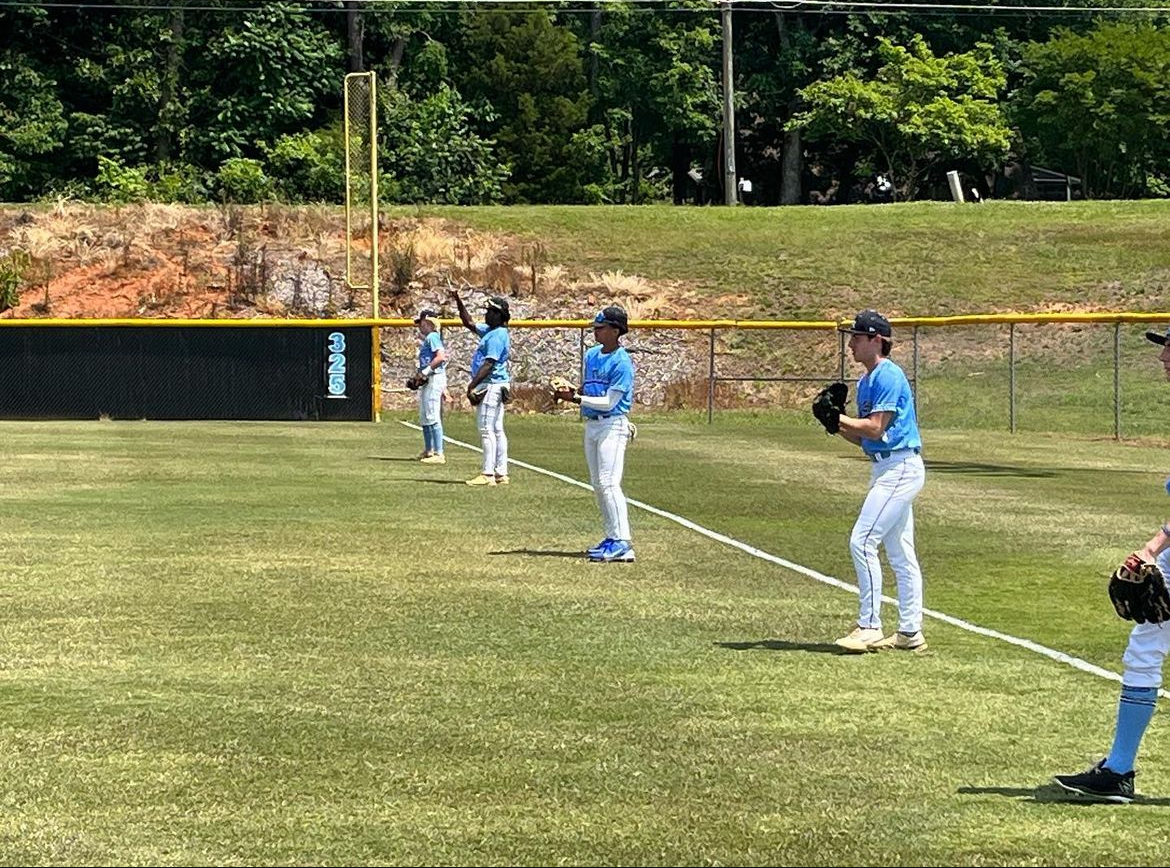
The quality of your throwing session or catch play is dictated by your ability to execute a proper throwing progression, starting with your very first throws. Every throw counts – whether you’re gearing up for a game, throwing a bullpen, or participating in a recovery day session. A well-structured throwing routine not only helps prevent injuries but also improves accuracy, arm strength, and overall mechanics. Apply these standards to maximize your potential on the field and set yourself up for success!

Establish Your Mechanics

Your first throws are crucial to set the tone for the rest of your session. Make sure they are focused, controlled and deliberate. Start with low-intensity drills that isolate the upper half at a shorter distance, working all the way to the full range of motion. The ten toes drill, when done correctly, can help you lock in your mechanics.

Locking in your mechanics early on reinforces proper muscle memory and ensures that your arm moves smoothly and efficiently through the correct range of motion. Skipping this step by lobbing your first few throws just to see if the ball will get to your partner leads to poor habits, which will only become harder to correct as the intensity increases. Make those first throws count, and the rest will follow.

Have a Focus

You can make meaningful progress by setting clear goals for yourself with each session. Your goal could be mechanical, building arm strength, working on consistency/accuracy, recovery, refining a particular pitch, or working on multiple objectives. Going into each day with a clear objective gives purpose to your throws. Without a goal, it’s easy to fall into a lull during catch play and waste valuable repetitions.

Before starting your catch play, decide what you want to get out of it. This could be hitting a consistent target, working on a certain mechanical cue, improving arm endurance, or just achieving full range of motion in your mechanics the day after a bullpen or game.

Utilize the Feedback of the Baseball

As you move through your catch play, it’s essential to use feedback from each throw to fine-tune your mechanics and adjust accordingly. Pay attention to the flight of the baseball—whether it’s sailing, cutting, or staying true—as it is a direct reflection of how well you are maintaining your form. A ball that consistently tails to one side or lacks carry can signal issues with your grip, release point, or posture. Use this real-time feedback to make necessary tweaks, ensuring each throw becomes more precise and efficient. By staying mindful of how the ball reacts, you’re not just going through the motions, but rather actively improving with every toss.

In conclusion, every throw in your session matters, from the first warm-up toss to the final throw of the day. Establishing solid mechanics early on, setting a clear focus for each session, and paying attention to the feedback from the ball are key elements to maximizing your development as a player. Incorporate these principles into your routine and you will improve your arm strength, your accuracy, and build the consistency needed for long-term success. Approach each catch play with intention, and you will find that the quality of your work translates into better performance on the field.