Categories
Blogs

Mental Reset: How to Bounce Back After a Bad Start

Picture this: You walk the first two batters of the game. The next hitter ropes a double into the gap, then you give up a single, and before you know it, you’re down 3–0 in the first inning. The mound feels smaller, you’re questioning that next pitch and every mistake feels magnified.

Sound familiar?

Here’s the truth: every pitcher, at every level, has had a bad start. MLB aces, college studs, and that kid who punched out 15 in a travel ball game last week have all had games where nothing seemed to click. What separates good pitchers from great ones isn’t avoiding bad starts altogether, it’s knowing how to reset and bounce back.

Baseball is a game of failure. Pitchers will make mistakes, hitters will capitalize, and sometimes nerves just get in the way. For high school pitchers, common causes include but are not limited to:

  • Rushing their mechanics
  • Nerves in a big game
  • A bad warm-up routine
  • Letting one mistake turn into two or three

But here’s the key: it’s not the first inning that defines you—it’s how you respond from there. When pitchers don’t reset, things often spiral. Frustration turns into loss of focus. Mechanics break down. Body language slumps. And suddenly, a rough first inning becomes an early exit.

Think about it from the other side: hitters and coaches can see when you’re unraveling, especially at the younger levels because a lot of athletes let their negative emotions show. Shoulder drop, eyes roll, pace quickens and general frustration kicks in. That body language tells everyone you’re beaten, even if nothing really bad has even happened.

That’s why a mental reset plan is so important as soon as possible. Here are four tools you can use to hit the reset button, even when the game feels like it’s slipping:

  1. Breathing routine/taking an intentional breath
    To slow the game down, you first must know how to slow yourself down. A deep, intentional breath in and out slows your heart rate down, recenters your focus and enables you to “check in” with yourself to see if you are in control, and helps release negative thinking
  2. Body language check
    How is your posture? Shoulders back, chest out, head tall. Even if you don’t feel confident, faking and acting confident will put you in a better position to be confident.
  3. Return to a pitch-by-pitch mentality
    The past is the past…lock in on the next pitch and focus on executing one pitch at a time. The task directly ahead of us is the most important. If you don’t win that pitch, focus on winning the next one.
  4. Implement your own personal reset/release
    Develop a routine to symbolically “release” negative thoughts or feelings…pick up dirt and throw it away, relax your arms and throw the ball in the air, wipe away dirt with your foot. That simple act can break the cycle of frustration.

MLB pitchers face this all the time. Max Scherzer has given up four runs in the first inning and still battled through six. Tarik Skubal has had games where his command wasn’t sharp early, but he adjusted and gave his team a chance to win. The difference isn’t mechanics, it’s mentality. They refuse to let one inning or a bad day dictate the game.

If pitchers at the highest level can bounce back in front of 40,000 fans, you can bounce back in front of a high school crowd.

Every pitcher will face bad starts. What separates you is how you respond. The best pitchers compete through adversity, use reset tools, and learn from the experience instead of spiraling. So next time things aren’t going your way, try one of these reset strategies. Breathe, reset, and attack the next pitch. Bouncing back isn’t just about saving one game, it’s about proving to yourself, your team, and the hitter in the box that you’re never out of the fight.
Categories
Blogs

Mastering Your Throwing Routine: Mechanics, Focus, and Feedback

The quality of your throwing session or catch play is dictated by your ability to execute a proper throwing progression, starting with your very first throws. Every throw counts – whether you’re gearing up for a game, throwing a bullpen, or participating in a recovery day session. A well-structured throwing routine not only helps prevent injuries but also improves accuracy, arm strength, and overall mechanics. Apply these standards to maximize your potential on the field and set yourself up for success!

Establish Your Mechanics

Your first throws are crucial to set the tone for the rest of your session. Make sure they are focused, controlled and deliberate. Start with low-intensity drills that isolate the upper half at a shorter distance, working all the way to the full range of motion. The ten toes drill, when done correctly, can help you lock in your mechanics.

Locking in your mechanics early on reinforces proper muscle memory and ensures that your arm moves smoothly and efficiently through the correct range of motion. Skipping this step by lobbing your first few throws just to see if the ball will get to your partner leads to poor habits, which will only become harder to correct as the intensity increases. Make those first throws count, and the rest will follow.

Have a Focus

You can make meaningful progress by setting clear goals for yourself with each session. Your goal could be mechanical, building arm strength, working on consistency/accuracy, recovery, refining a particular pitch, or working on multiple objectives. Going into each day with a clear objective gives purpose to your throws. Without a goal, it’s easy to fall into a lull during catch play and waste valuable repetitions.

Before starting your catch play, decide what you want to get out of it. This could be hitting a consistent target, working on a certain mechanical cue, improving arm endurance, or just achieving full range of motion in your mechanics the day after a bullpen or game.

Utilize the Feedback of the Baseball

As you move through your catch play, it’s essential to use feedback from each throw to fine-tune your mechanics and adjust accordingly. Pay attention to the flight of the baseball—whether it’s sailing, cutting, or staying true—as it is a direct reflection of how well you are maintaining your form. A ball that consistently tails to one side or lacks carry can signal issues with your grip, release point, or posture. Use this real-time feedback to make necessary tweaks, ensuring each throw becomes more precise and efficient. By staying mindful of how the ball reacts, you’re not just going through the motions, but rather actively improving with every toss.

In conclusion, every throw in your session matters, from the first warm-up toss to the final throw of the day. Establishing solid mechanics early on, setting a clear focus for each session, and paying attention to the feedback from the ball are key elements to maximizing your development as a player. Incorporate these principles into your routine and you will improve your arm strength, your accuracy, and build the consistency needed for long-term success. Approach each catch play with intention, and you will find that the quality of your work translates into better performance on the field.

Categories
Blogs

The 80% Rule

As a pitcher, it’s hard to make mechanical adjustments in a game, especially with the increase in stress that comes with competition. The game moves fast for those that don’t know how to slow it down, so you end up trying to make adjustments at a faster pace than you are used to. The only way to reset yourself is to slow the game down, but what does that actually look like?

The rule that I emphasize to pitchers is to lower their intensity to 80%. I believe 80% is the perfect balance of establishing your pace while keeping a competitive edge. Lowering your intensity does not mean you are losing focus or throwing 20% slower. For most players, the difference in velocity from their perceived relaxed 80% and tensed 100% might be a mile or two. The goal is to regain a consistent flow and rhythm in your mechanics. 

By lowering your intensity to 80%, you give your body time to feel fluidity through each point in your mechanics, from your leg kick to release. Instead of rushing to throw the ball, you can feel more relaxed in the load phase. The looser you are when you load, the more energy you can build up. Once you are able to regain a full range of motion, you can start gradually kicking up the intensity gradually to 100%.

The 80% rule is applicable when a new stress is presented that pushes you out of rhythm. It’s when you have that “the game is moving too fast” feeling. If your solution is to try to catch up to the speed of the game at 110% or 120%, you will lose consistency. Your body will start to tense at points in your mechanics that do not require tension to match the quicker pace you think you need. This opens up flaws –shortening your delivery, rushing down the mound, or putting more stress on the arm – because you are working at a pace that your body can’t handle.

A common time pitchers need to use the 80% rule is in the middle of a strenuous inning. However, one situation that doesn’t get enough attention where the 80% rule is applicable is the  start of a game. The first inning is one of the toughest innings for a pitcher, as they are entering a completely new environment.

No matter what your bullpen or warm-up pitches look like, once those first batters step into the box it’s totally different. Too many pitchers feel good in their bullpen, then jump into the game at 110% and walk the first two batters. Rather, they should treat the first batter like the new stress it is and utilize the 80% rule right from the beginning. Focus on finding your pace, feeling loose and smooth through your mechanics. Find the rhythm that works for you to settle into the game as early as possible. It might take a few pitches or even a batter to make this happen, but that first batter presents the lowest stakes of your entire outing to settle yourself in.

The 80% rule is even more important to a relief pitcher, whether they have a clean inning or are coming in during the middle of an inning. Treat that first pitch or two as your chance to find your rhythm. Obviously, as a reliever, you want to execute right away. The best chance you have to execute is in a familiar, comfortable rhythm. Once you find your rhythm and feel confident at 80%, you can start kicking up your pace to 100%.

The 80% rule is all about taking control of something you can control: your own pace and your mechanics. Instead of trying to think through complicated changes in a game, get your head out of the way. Take a deep breath, relax your mind, and let your body do what it knows how to do.

Categories
Blogs

Risk v Reward

In the finance world, people look for an investment that can net them a profit. They want a low-risk, high-reward opportunity that provides a large return. However, if we take this into the context of baseball, a successful baseball career would not be something an investor would look to put their money in to guarantee a profit.

Baseball requires a great amount of risk with a lower potential for achieving the reward. For example, a college roster has 45+ players competing for the nine spots on the field. The MLB has four levels (not counting rookie ball or the FGCL) of minor leaguers competing for the 40-man roster spot. Even at the high school level, strong conferences have eight or so teams of players all fighting for the all-district honors, and even more teams fighting for all-state honors.

No matter your goal in baseball, the cards are usually stacked against you. Rewards and roster spots are not handed out like participation trophies. You have to be willing to take on the risk and you have to be comfortable being uncomfortable with how tough it might be to achieve the reward. Because if you don’t work to find comfort with being uncomfortable, somebody else will.

Risk is the uncertainty that your investments will pay off, so you have to be comfortable investing the time, effort, and energy that you have to put into improving your skills. You are investing time to train, lift, throw or hit that you could spend hanging out with friends or family. You are trading late nights out with going to sleep early so you can recover well for the next day. By pushing yourself to do the extra reps on the field and in the weight room, you are risking your energy and effort. You are exhausting your focus and physical abilities to improve your baseball performance.

So why is it even worth the risk if the reward is so hard to achieve? Because that feeling of breaking through and reaching a goal is second-to-none when you know how much you risked to get there. The hard work, the roadblocks you hit along the way, the pain, the frustration, the moments when you wanted to quit but just kept going anyway. Those times of adversity you faced, while they were anything but enjoyable at the moment, make reaching your goal feel amazing because you know you deserved it.

I read a quote that says “winning is more fun than fun is fun” and I couldn’t agree more. You’ll have teammates who enjoy being on the field with friends, throwing, and taking some batting practice. Their “fun” will never truly reach the level of fun that comes with winning because they aren’t willing to risk what it takes to win.

Be the one that is willing to take the risks. There will be tough stretches along the way that you may not see an end to but don’t lose sight of the reward you are working for. The values you learn from taking these risks will grow you as a ballplayer and as a human being. It will make you mentally stronger as you continue your baseball journey and life outside the game.

Categories
Blogs

FOCUS

In any competition, maximum focus is necessary to ensure the highest quality of performance. In a sport like baseball that some people describe as “slow” and “uneventful” (everybody has their own opinion, but they are wrong), focus is still necessary for high-stress situations. We have complete control over our focus. Understanding the different levels of focus and how to train your focus will improve your performance in the heat of competition.

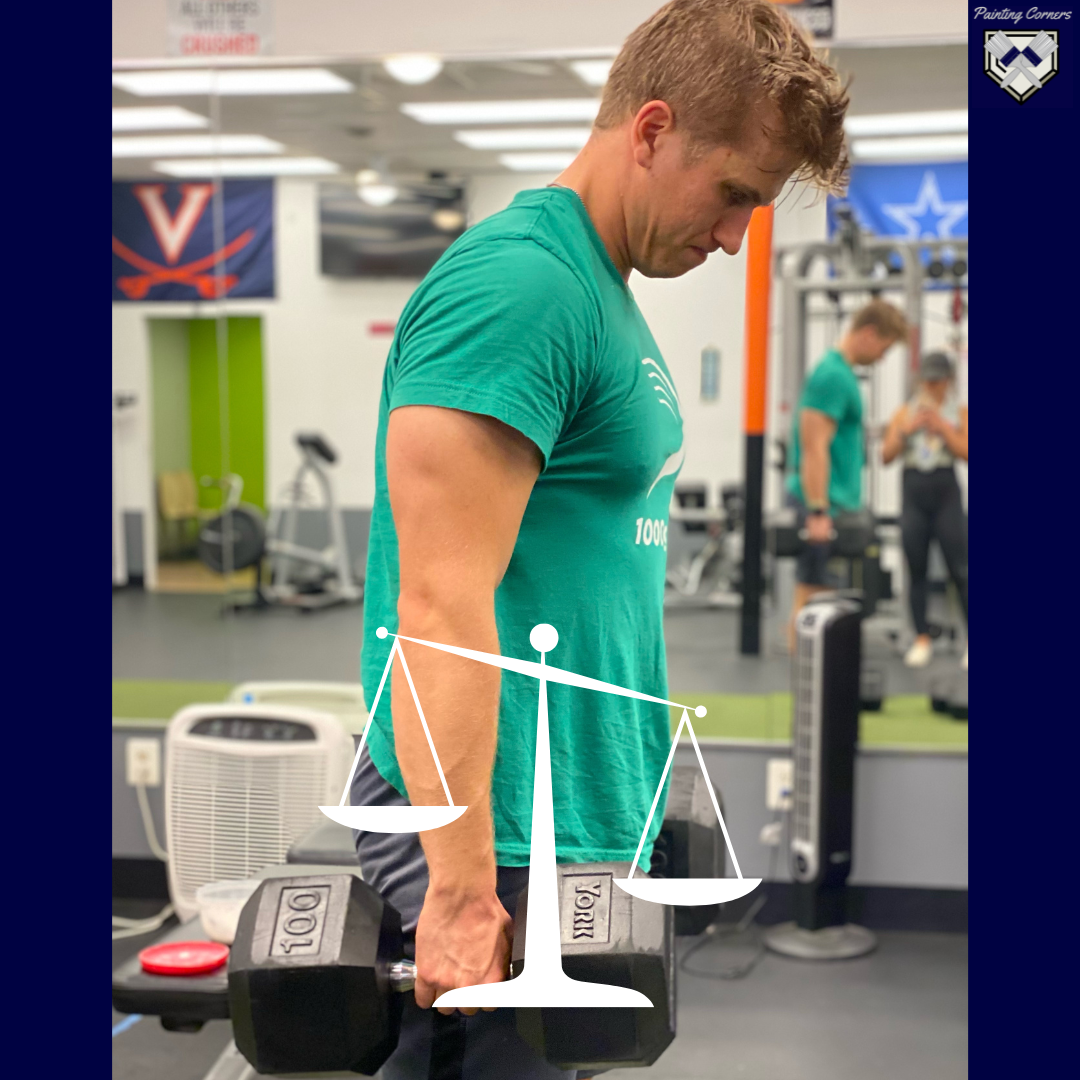
Your level of focus directly correlates with the potential of action or the level of stress in a situation. Mistakes happen primarily when our focus does not line up with the situation. Your preparation, skill, and ability have nothing to do with those mistakes. It is purely the focus. This applies to more than baseball.

In aviation, for example, there is a rule related to focus called the cockpit rule. In 1981, the Federal Aviation Administration (FAA) reviewed a series of accidents caused by the flight crew being distracted from flying duties. They found that a majority of accidents happened below 10,000 feet, the most critical part of the flight, due to “non-essential conversations” and activities. As a result, the FAA imposed this rule, stating that only conversations related to the flight itself are allowed below 10,000 feet to ensure the highest focus during essential action. When an airplane surpasses 10,000 feet, conversations can relax since there is a low chance of error.

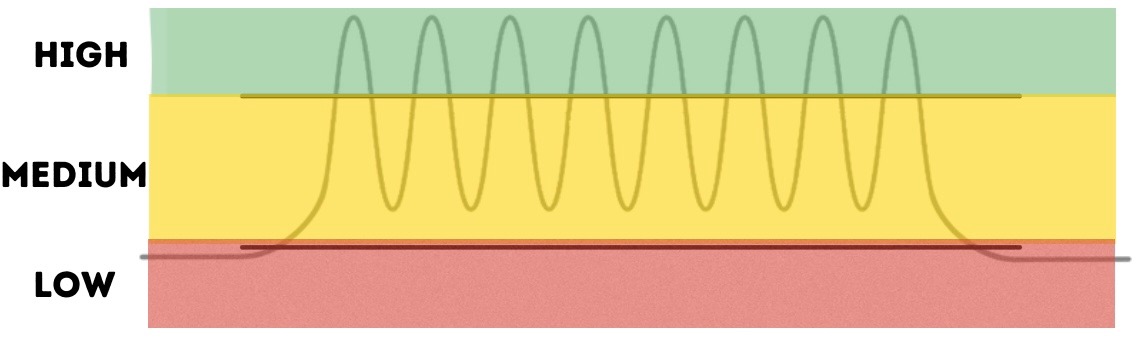
So how can this rule relate to baseball? Both aviation and baseball have times of high focus and low/medium focus, even if they flow differently. When you are in those essential situations in baseball, you need to hold your focus accountable just like a pilot. Stepping in the box, getting on the rubber, or prepping for the pitch in the field is the equivalent of being under 10,000 feet when flying a plane. Those moments require 100% of our attention to minimize error.

The medium focus moments are the other time we are in the field in between pitches. We still need to assess the last pitch, have conversations with ourselves to prepare for the next pitch, and come back to high focus, but there is a lesser chance of immediate error. For comparison, medium focus when flying a plane is at cruising altitude: it is the smoothest part of the flight, but issues like turbulence can still come up.

Low focus moments are in between innings or when you are not involved in the game. As a pilot, the equivalent is the plane on the ground and at the gate. In both examples, there are no errors to make because it is in between the essential action.

Flow of focus in baseball (top) versus aviation (bottom)

Being able to hone in your focus in high-intensity situations looks like it just happens for the best of the best. Pitchers like Max Scherzer and Justin Verlander can turn it up to a different level in the backend of their starts when fatigue sets in and the outs are more important. However, players like them do not get to that level of focus overnight. 

Just like any skill, quality repetitions and practice helped them improve their focus. Low-risk reps, such as throwing a bullpen, taking batting practice, or fielding ground balls, can be used to hone your in-game focus. Hold yourself accountable. Use these times to train your focus by practicing quick adjustments in low-pressure situations so you are prepared to make them in high-pressure ones. 

Let’s say you are throwing a bullpen and you want to work on executing your offspeed pitch late in counts. You need to put yourself in that game-like mindset, envisioning the batter in the box staring you down and the catcher flashing you signs. Focus on your breathing, cues, and self-talk to make sure you execute that pitch with a game-level intensity. You have time in that bullpen to work on hitting your spot, but once you get in a game, you have one chance to execute a 1-2 offspeed pitch in the 7th inning with the bases loaded. Focusing and throwing four well-executed offspeed pitches in a bullpen is a lot better than throwing ten pitches in one minute.

Different moments in a game require different levels of focus. You do not need to be 100% focused the entire time. Honestly, that is just a waste of energy. However, as I have said over and over so far, we have to be able to turn it up when the situation calls. By practicing and understanding your level of focus, it will subconsciously increase when the moment calls for it, priming you for success.

Categories
Blogs

Utilizing Technology in Recruiting

As a high school baseball player with aspirations to play at the next level, you need to go through the process of getting yourself on the radar of colleges. While the means of getting recruited have changed, the concept is still very simple: you are trying to sell yourself to a coach that you fit their program. Consider yourself a sales person selling yourself to the buyer, which is a coach.

You want to provide information to the coach that answers their questions of why you should be in their program. There are many different markets to sell yourself to, which are the different programs that are looking for certain metrics/data in order to find their players. The more relevant and in-depth data you provide, the more likely you are to hear back and move forward with the recruiting process. 

When I was trying to sell myself back in 2015, there were very limited resources I could utilize but I used every single one. As a pitcher, my emails to coaches consisted of my pitching velocity, height, weight and an iMovie quality recruiting video. At that time, I was using the same tools everyone else provided to coaches in order to be competitive with other baseball players trying to sell themselves in the same market.

Jumping ahead to 2021, sales techniques have evolved dramatically. The evolution in sales techniques for recruiting is due to the emergence and mass availability of data-collecting technology, such as Rapsodo, Hitrax, Blast, Pocket Radars, etc. You can now find these tools at training facilities and colleges across the country, so why not utilize them for your recruiting? Chances are other athletes fighting for that recruiting spot are doing the same thing.

There are many benefits to adding data gathered by these tools to both your recruiting messages and emails. Primarily, it gives the coaches a ton of your data at their fingertips without having to gather it themselves. As a pitcher, you can provide your pitch velocity, spin rate, spin efficiency, vertical and horizontal movement all attached to a video referencing the pitch. As a hitter, you can provide your exit velocity, max distance, bat speed, and so many more metrics. Now, without even having to watch you play, they have a feel for your base metrics.

This leads into the second benefit – the coaches’ familiarity with all of these metrics and technology. Coaches have a lot of experience utilizing these tools within their own program. As a result, they know the metrics and qualities that they are looking for when recruiting. While sending a coach your pitching velocity with a video of the three pitches you throw can be okay, sending a Rapsodo report of multiple bullpen sessions provides a lot more useful information for that coach to utilize. By comparing these qualities to the data they’ve seen from players in their conference or in their program, they can determine if you are fit for their team.

Overall, providing relevant data from these credible tools will grab the attention of coaches. While they will still need to watch you play in person and contact your current coaches to get a feel for the type of player you are, utilizing these tools is the most effective first step in reaching out to a program you’re interested in. Recruiting continues to evolve with the increase in technology, so in order to maximize your chances to play at the next level, your recruiting strategy must evolve too.