Categories
Blogs

Avoiding the Big Inning

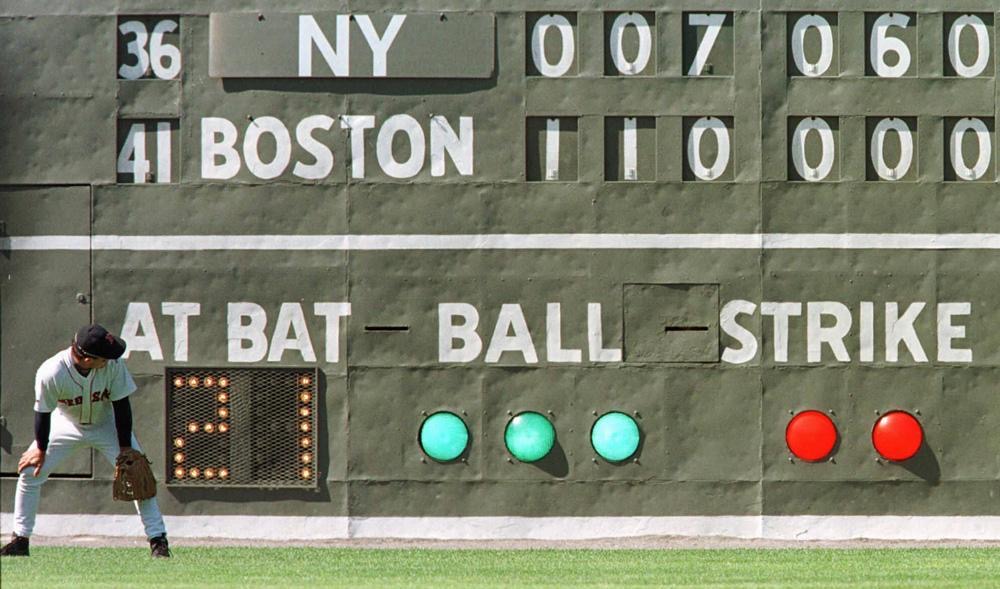
When I played in college, one statistic we tracked during games was the number of innings in which we gave up one or fewer runs. We believed that by only seeing 1s and 0s on the scoreboard, we’d put our team in a great position to win. I’ve seen that idea ring true with really any other team I’ve coached or played for. Avoiding those disastrous “big innings” puts your team in a much better position to win. It takes a lot of internal awareness to “plug the leak” in an inning that’s getting out of hand because you could really win or lose a game with one crooked inning.

 As a pitcher, sometimes it seems like these big innings happen in the blink of an eye. I remember pitching in a summer league after my freshman year of college. I had been putting up quality outings all summer except for this one game where I gave up nine runs in an inning. I got through the first two innings without a problem. The third started with giving up some free bases to the bottom hitters, flipping it to the top of the lineup, and then the flood gates opened up.

In that situation, I felt like the big inning just ended up happening before I even knew what was going on. That excuse is common among many pitchers, which is why thinking that “it just happened” is one of the biggest reasons big innings occur. It means the pitcher lost awareness of the situation and really didn’t do anything in that moment to make any adjustments. It makes it sound like the pitcher had nothing to do with the inning and everything just happened to them. If a pitcher relinquishes control of the game like that, a big inning is bound to happen.

There are many factors that lead to the loss of awareness for the pitcher. Negative self-talk could develop when there’s traffic on the bases or multiple runs scored. Their focus could shift primarily to external factors, like errors, runners on base, hard-hit balls, or bloopers, removing their focus on the task at hand. Their mechanics could start breaking down because you’re thinking about working quickly or “just trying to throw strikes.”

There is one similarity between these factors: they are thoughts and behaviors. None of what I listed is based on performance or results, but just what precedes the outcome of giving up a big inning. There will be times when you will get beat in a spot with runners on base and give up multiple runs in an inning. But it’s all about how you respond to that adversity. 

So how can we better equip ourselves when we can sense a big inning happening or a high-pressure situation coming? To combat the “it just happened” thought, the most important action is to step off the mound and recapture the tempo of the game. Remove yourself from the larger task. Instead of thinking about getting out of the inning with no runs, focus on executing your next pitch. Once you step back on the mound and throw your pitch, plan and execute the pitch after that. This helps you focus on the process and executing subtasks, slowly chipping away at completing the inning

If you find your internal conversation becoming negative, flip the perspective on the dialogue. If there’s a tough-luck hit or error, remind yourself that you executed your pitch and bad luck just happens. If the umpire makes a bad call, redirect your focus to what you can control, which is the next pitch. If you just gave up multiple runs, analyze and adjust your process however necessary then focus on that adjustment. The idea that baseball players need to have short-term memories is vital in limiting a big inning from becoming even bigger.

A single big inning can be deadly in a baseball game. It can put a lead out of reach, swing momentum to the other dugout, or just knock the wind out of your team. Nobody likes being that guy standing on the mound with a crooked number on the scoreboard. Being able to remove yourself mentally, take control of the tempo and adjust your self-talk before those innings get out of hand will help minimize any potential damage and keep your team in the game!

Categories
Blogs

FOCUS

In any competition, maximum focus is necessary to ensure the highest quality of performance. In a sport like baseball that some people describe as “slow” and “uneventful” (everybody has their own opinion, but they are wrong), focus is still necessary for high-stress situations. We have complete control over our focus. Understanding the different levels of focus and how to train your focus will improve your performance in the heat of competition.

Your level of focus directly correlates with the potential of action or the level of stress in a situation. Mistakes happen primarily when our focus does not line up with the situation. Your preparation, skill, and ability have nothing to do with those mistakes. It is purely the focus. This applies to more than baseball.

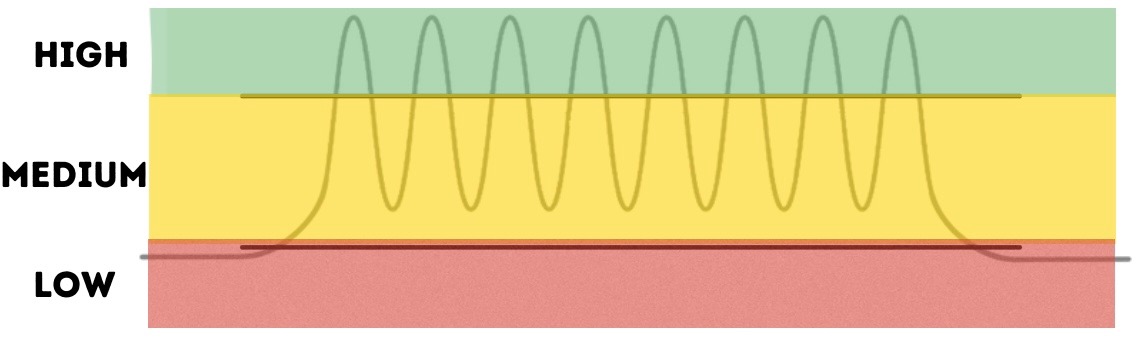
In aviation, for example, there is a rule related to focus called the cockpit rule. In 1981, the Federal Aviation Administration (FAA) reviewed a series of accidents caused by the flight crew being distracted from flying duties. They found that a majority of accidents happened below 10,000 feet, the most critical part of the flight, due to “non-essential conversations” and activities. As a result, the FAA imposed this rule, stating that only conversations related to the flight itself are allowed below 10,000 feet to ensure the highest focus during essential action. When an airplane surpasses 10,000 feet, conversations can relax since there is a low chance of error.

So how can this rule relate to baseball? Both aviation and baseball have times of high focus and low/medium focus, even if they flow differently. When you are in those essential situations in baseball, you need to hold your focus accountable just like a pilot. Stepping in the box, getting on the rubber, or prepping for the pitch in the field is the equivalent of being under 10,000 feet when flying a plane. Those moments require 100% of our attention to minimize error.

The medium focus moments are the other time we are in the field in between pitches. We still need to assess the last pitch, have conversations with ourselves to prepare for the next pitch, and come back to high focus, but there is a lesser chance of immediate error. For comparison, medium focus when flying a plane is at cruising altitude: it is the smoothest part of the flight, but issues like turbulence can still come up.

Low focus moments are in between innings or when you are not involved in the game. As a pilot, the equivalent is the plane on the ground and at the gate. In both examples, there are no errors to make because it is in between the essential action.

Flow of focus in baseball (top) versus aviation (bottom)

Being able to hone in your focus in high-intensity situations looks like it just happens for the best of the best. Pitchers like Max Scherzer and Justin Verlander can turn it up to a different level in the backend of their starts when fatigue sets in and the outs are more important. However, players like them do not get to that level of focus overnight. 

Just like any skill, quality repetitions and practice helped them improve their focus. Low-risk reps, such as throwing a bullpen, taking batting practice, or fielding ground balls, can be used to hone your in-game focus. Hold yourself accountable. Use these times to train your focus by practicing quick adjustments in low-pressure situations so you are prepared to make them in high-pressure ones. 

Let’s say you are throwing a bullpen and you want to work on executing your offspeed pitch late in counts. You need to put yourself in that game-like mindset, envisioning the batter in the box staring you down and the catcher flashing you signs. Focus on your breathing, cues, and self-talk to make sure you execute that pitch with a game-level intensity. You have time in that bullpen to work on hitting your spot, but once you get in a game, you have one chance to execute a 1-2 offspeed pitch in the 7th inning with the bases loaded. Focusing and throwing four well-executed offspeed pitches in a bullpen is a lot better than throwing ten pitches in one minute.

Different moments in a game require different levels of focus. You do not need to be 100% focused the entire time. Honestly, that is just a waste of energy. However, as I have said over and over so far, we have to be able to turn it up when the situation calls. By practicing and understanding your level of focus, it will subconsciously increase when the moment calls for it, priming you for success.

Categories
Blogs

Fear of Failure

Failure is inevitable in sports, work, school, and every other part of life. People either fail because of external factors, such as the environment or competition, or internal factors. Lack of persistence, discipline, or knowledge are great examples of internal factors that lead to failure. However, some people are fully equipped with the persistence, discipline, and knowledge to succeed, but are held back by their fear of failure.

The fear of failure will repress any positive attributes you do have and limit the effort you give when playing in a game or working towards a goal. For example, let’s say you are a shortstop and a ball is hit up the middle. The ball is on the edge of your range –  you will have to dive to make an above-average play to field the ball – but it’s well within your capabilities. Your pre-pitch preparation is perfect, you react to the ball off the bat and take a good angle to field it, but at the last minute, you hold back and lunge rather than dive. And you miss the ball by six inches. Did you try your best to field the ball? No.

Do you think you would have fielded the ball if you gave your full effort and dove? You will never know because you did not give yourself the chance to find out. Missing the ground ball was not due to a lack of talent; everything was perfect leading up to that last moment. That fear of failure never gave you the opportunity to find out if your talent and capabilities would allow you to field that ball. In the moments after the ball goes to the outfield, you are probably thinking that you failed in fielding the ground ball. I would argue that you did not fail and really can’t be frustrated at yourself for failure because you did not even try.

Success only comes from vulnerability. When you put yourself in situations where you have something to lose and you give maximum effort, then you allow yourself to be successful. If your goal in the offseason is to throw 80 mph, your vulnerability will come from the time and effort you put into training towards that goal, knowing that you could potentially fall short. Are you choosing to hang out with friends, eat junk food, and stay up late playing video games? Or are you choosing to put time into training, eat healthily and get enough sleep to recover?

The continuous effort is the fearlessness you need. That way once it is time to assess your goal, you can truly determine if you succeeded or failed. The worst feeling in the world is looking back after not achieving a goal or making a play in a game/practice and thinking “maybe I could have done more.” As the saying goes, hindsight is always 20-20.

You must be fearless in the eyes of failure if you want to succeed. There will be many high-pressure situations in games, and even practices or tryouts, where failure is staring you in the face. You have two options: not give your full effort and increase the likelihood of failure, or be vulnerable to failure and allow yourself to truly determine if you are capable of success. You might not field that ground ball, but you will never know if you do not try.

Categories
Blogs

Love the Process

Every athlete has some sort of goal in mind, whether it be personal accolades, team success, or aspirations of playing at the next level. The best athletes use these goals as motivation to work, enduring the process day in and day out. They also understand that the process will include setbacks, because it’s not a linear progression to achieve a result. As Joel Embiid made famous, you have to “trust the process” and not get distraught by setbacks.

The process makes up about 99% of a player’s life as an athlete compared to the result making up that last 1%. Training sessions, workouts, practices, extra reps, games, and everything in between are all a part of the process. Since the process takes up so much time, we have to train with a process-oriented mindset in order to achieve the true result. If we approach each day seeking the gratification of achieving a goal or result, we will end up frustrated and mentally lost almost every day. Being result-oriented causes us to lose motivation or leads to setbacks that could be avoided.

In order to have a process-oriented mindset, we have to understand that a single day will not make or break the goal. There will be great days when we feel like our training sessions or games went well, which makes it really easy to enjoy the process. However, there will be some small or big setbacks throughout the process that will make us question its intent. The process-oriented mindset allows us to view our progress in a bigger picture and understand there is still a path to success, allowing us to regain our confidence and motivation. We can do this by reflecting on the improvements made or progression achieved, or resetting your focus to that bigger result we are truly seeking.

By continuing to work through the process, we put ourselves in a strong position to achieve our goal or result. Once we achieve our result, it’s important to celebrate and admire what has been accomplished in order to avoid getting stuck in the cycle of the process. As mentioned earlier, the process is 99% of the journey but when that result comes around, we have to allow ourselves to enjoy the reward,

And when we accomplish one goal or result, the process starts back up again as we aim for our next one. For example, if a pitcher is training to throw 85mph on the mound, once that number is hit, they set a new goal. The pitcher will celebrate reaching their first goal, but now there is a new result to work toward. The same thing applies in a team setting: if a team works all off-season and then wins a championship, do you think they are done? No, the new desired result is to win two championships in a row. Then if they accomplish that, they will go for a three-peat.

This is the cycle a player endures throughout their entire career. The players that find the most success are the ones that live for the process because they know it can make them great. The reality is that a player’s career does not end after one result, it ends when they are done going through the process. So if you want to have a long, rewarding career, you have to love and trust the process.

Categories
Blogs

Internal v External Cues

Utilizing cues when presented with mechanical flaws in training or subpar in-game performance are key to making adjustments without overbearing the mind. The number of things that can go wrong in a pitcher’s mechanics is mind boggling. Dr. Greg Rose for OnBase U describes TWELVE different deficiencies that could negatively impact the maximum output of a pitch. While there are many ways to go about fixing these flaws, a simple cue, whether internal or external, can help a pitcher make something “click” and be used many times over.

There are two types of cues: internal and external. Internal cues are focused towards the process of your body to execute a movement. Example cues would include sitting into your hip or extending your glove to your target. While these are simple thoughts, they fix important parts of the mechanics without having to overthink about them specifically. Sitting into your hip would be a good cue for somebody who does not hinge well or gets out in front.

External cues are focused more on the result after the ball is released. Once we achieve the result, we work backwards to determine the mechanical adjustment made or the “feel” of the throw. Examples of external cues would be to throw through the catcher or to spike the off-speed pitch. Just like the internal cues, these fix important parts of your mechanics without overthinking. These are both good cues for pitchers that fly open early and do not get to extension, whether it be on their fastball or off-speed pitches.

It is important that a pitcher utilizes cues when training because they are not a one size fits all situation. For a pitcher that leaks their front side, a cue based on their glove might “click” while another pitcher might understand a cue focused on their elbow or hip. These are two totally separate cues and, if they work, they will get the same positive result.

In the end, the whole point of training and understanding what cues work for a pitcher are so they can be utilized in games. Adjustments NEED to be made pitch to pitch in order to maximize success. Making three or four bad pitches in a row because the pitcher is not adjusting towards their cues can change the flow of an inning or even an entire outing.

Cues are great in this setting because they allow the pitcher to focus on just one or two aspects of their mechanics. This minimizes the thinking that goes into making mechanical changes and the pitcher can continue the flow of their motion without breaking it down too in depth. It could be as simple as a quick reminder to yourself that goes like “stay over the rubber” if you’re falling forward. If you watch an MLB pitcher, you see these cues and reminders being reinforced all the time.

Example of Marcus Stroman going through his mechanics in slow motion to feel/cue different body parts.

Internal and external cues apply to every sport, not just baseball, because each sport has a mechanical aspect. The block of a lineman in football, the jump shot in basketball and the power clean for an olympic lifter all require fluid mechanics in order to produce the correct result consistently. Athletes in each sport utilizes some form of internal and/or external cues, train them everyday and implement them in competition. The focus and conviction to these cues is one of the many things that make the best stand out.

Categories
Blogs

Utilizing Technology in Recruiting

As a high school baseball player with aspirations to play at the next level, you need to go through the process of getting yourself on the radar of colleges. While the means of getting recruited have changed, the concept is still very simple: you are trying to sell yourself to a coach that you fit their program. Consider yourself a sales person selling yourself to the buyer, which is a coach.

You want to provide information to the coach that answers their questions of why you should be in their program. There are many different markets to sell yourself to, which are the different programs that are looking for certain metrics/data in order to find their players. The more relevant and in-depth data you provide, the more likely you are to hear back and move forward with the recruiting process. 

When I was trying to sell myself back in 2015, there were very limited resources I could utilize but I used every single one. As a pitcher, my emails to coaches consisted of my pitching velocity, height, weight and an iMovie quality recruiting video. At that time, I was using the same tools everyone else provided to coaches in order to be competitive with other baseball players trying to sell themselves in the same market.

Jumping ahead to 2021, sales techniques have evolved dramatically. The evolution in sales techniques for recruiting is due to the emergence and mass availability of data-collecting technology, such as Rapsodo, Hitrax, Blast, Pocket Radars, etc. You can now find these tools at training facilities and colleges across the country, so why not utilize them for your recruiting? Chances are other athletes fighting for that recruiting spot are doing the same thing.

There are many benefits to adding data gathered by these tools to both your recruiting messages and emails. Primarily, it gives the coaches a ton of your data at their fingertips without having to gather it themselves. As a pitcher, you can provide your pitch velocity, spin rate, spin efficiency, vertical and horizontal movement all attached to a video referencing the pitch. As a hitter, you can provide your exit velocity, max distance, bat speed, and so many more metrics. Now, without even having to watch you play, they have a feel for your base metrics.

This leads into the second benefit – the coaches’ familiarity with all of these metrics and technology. Coaches have a lot of experience utilizing these tools within their own program. As a result, they know the metrics and qualities that they are looking for when recruiting. While sending a coach your pitching velocity with a video of the three pitches you throw can be okay, sending a Rapsodo report of multiple bullpen sessions provides a lot more useful information for that coach to utilize. By comparing these qualities to the data they’ve seen from players in their conference or in their program, they can determine if you are fit for their team.

Overall, providing relevant data from these credible tools will grab the attention of coaches. While they will still need to watch you play in person and contact your current coaches to get a feel for the type of player you are, utilizing these tools is the most effective first step in reaching out to a program you’re interested in. Recruiting continues to evolve with the increase in technology, so in order to maximize your chances to play at the next level, your recruiting strategy must evolve too.

Categories
Blogs

Difference Between High School and College Baseball

There is a big difference between having the talent to play college baseball and having the mindset to be successful at the next level. College baseball is a completely different animal than high school baseball. The sooner the athlete realizes that, the less of a surprise that will be if they wish to continue their playing career past high school. College baseball brings forth many new challenges. A prospective athlete not aware of (or ignorant to) this could unknowingly ruin their college experience. Here are a few of the biggest differences between high school and college baseball:

Time commitment

During the week, the average high school baseball player will wake up and go to school at 8am, then have practice after school for two to three hours or a game if you are in-season. On the weekend, they will probably have a practice on Saturday and then have the rest of the weekend to relax. In the off-season, most players will work at their own discretion to get better, whether that be with a separate program or your high school team.  This is generally optional.

College baseball is an entirely different commitment. You are expected to be at the field at least six out of the seven days a week year-round, in-season and out-of-season.. An average week for a college baseball player consists of three to four mandatory lifts, which can start as early as 6am. After finishing classes for the day, practice will usually go for at least 4 hours focusing on every aspect of baseball. Catchers, infielders, outfielders and pitchers will all work separately before all coming together to work on team defense and then some form of batting practice or intersquad. All of this is ON TOP of work you are expected to do outside of practice, such as cage work or other defensive reps. After those hours at the field, you need to complete your studies and coordinate anything you need to be successful in the classroom. This includes communicating missed classes due to games/travel with your professor, attending study hall and completing all of your work for the next day. Then you get up and start this cycle again the next morning.

Competition

Competition goes beyond playing against other teams. A collegiate baseball player must  compete within his own team for that one starting spot. At the high school level, it is easier to find playing time if you are talented, so there is no tough battle to get at bats or innings if you put in a little work. However, at the collegiate level, everybody was one of those talented players from their high school.

The playing field is as balanced as possible and the reality is the starting role can be won or lost in a single day. You need to have that drive to compete against your teammates all day every day, in intersquads, practice, lifts, extra work and everything else. Each day, you need to ask yourself “did I beat my teammate today” and then think “how many more times do I need to beat him before I can solidify that starting spot.” If you did not win that day, you need even more conviction to go out tomorrow and win. And if you aren’t the one playing on game day, you shouldn’t ask yourself “Why isn’t that me?” Instead, you’ll need to use it to motivate you even more to take that spot. The hard reality is that your opponent probably outworked you and you need to work harder. A great example of a college athlete who worked through this adversity would be Mac Jones, the quarterback for Alabama, who went from third string to a Heisman finalist.

Apology to Mac Jones: From projected benching to Heisman finalist

Culture of the program

This aspect is the biggest difference between high school and college baseball. In high school, leadership comes mainly from the coaches with the help of some accomplished upperclassmen who try to lead the way for younger players. The coach will preach the culture of the program, but the reality is that a culture does not come to fruition unless every single player buys into it. Sadly, there will always be high school players who find the culture as something that’s “extra” and not necessary.

In college, how the culture is laid out and how much you buy could single handedly enhance or ruin your career. While the culture is set by the coaches, it is reinforced by the players. As a member of a program, you are in charge of holding yourself and everybody else accountable to continue to move in the right direction. My college coach would always say “culture is the boss when the boss ain’t there,” meaning it was not his job to reinforce the culture, it was ours all the time. There is no option to ignore the culture and just think your talent will make you successful. By committing yourself to a program, you are committing yourself to the culture and all the players that live that culture. And if you let the culture down, you let yourself and all of your teammates down.

Who will come out successful

College baseball is full of challenges, but there is always a path to succeed. Everybody on the roster wants to be the guy, wants to get the playing time or pitch in high leverage scenarios. If you compete everyday, hold yourself accountable to the standards of the team and take pride in the work you put in, you can set yourself up for success. None of these keys to success take talent…it is merely your effort, which you can control. So the question is, do you want to put in that work?

Categories
Blogs

MLB’s Handling of the Coronavirus Sucks

It’s been just over a week and baseball is already not off to a hot start. Two teams missed a full week of games and another separate series was postponed due to COVID outbreaks. With the subpar restrictions and poor judgment by the league, I knew that something like this was bound to happen. To be honest, I wouldn’t be surprised if the MLB doesn’t get through the 60 game season.

So far, 17 players on the Marlins and two coaches have tested positive, five more members of the Cardinals, and two members of the Phillies’ club…all within the last week! On the other hand, we have the NBA and NHL both reporting ZERO coronavirus cases since July 13 and 18, respectively. My issue is that the way the NBA and NHL are doing it was attainable for the MLB.

Both the NHL and NBA are putting their players in a “bubble” in set locations, with the NBA being in Orlando and the NHL being in Toronto and Edmonton. This allows them to isolate themselves from other people, keeping the possibility of an outbreak under control. If players do leave, they are required to quarantine for 10 days and take multiple COVID tests before returning to play. By forcing players to do this, the leagues have kept them safe and healthy.

The thing is, the MLB had the opportunity to do this by isolating teams in their Spring Training facilities in Arizona and Florida. Each team would have their field, facility, and hotel to stay in, with their only travel being within the state to other team’s fields. Everything else would be the same as it is now, with no spectators and minimal interaction with people outside of each team’s “bubble.” The players wouldn’t be allowed to go to restaurants or travel or do anything else that could potentially put others at risk.

So why didn’t baseball do this? For the same reason the season got started so late as-is: the owners. The owners are so worried about minimizing their losses this year, that it may have put their players and the likeness of the game at risk. The league has set records in revenue each year since 2001, so you’d think they could take a hit for one year in order to promote the game of baseball.


Major League Baseball total league revenue from 2001 to 2019 in billion U.S. dollars (Statistica.com)

But the greediness of the owners just reared its ugly head again with the lack of safety for the players. If the owners had been willing to take this hit, the season would have started earlier in these Spring Training facilities. This would have allowed for there to be more than a measly 60 games and it would have made the players safer.

As much as I blame the owners, Rob Manfred has also done a poor job. His overseeing of this season’s set up was subpar. The league allowing the Marlins to play the Phillies last week after four players tested positive on the Marlins is absolutely ridiculous. Then, just this past weekend, he blamed the players for the spike in coronavirus cases and threatened to shut the league down. You can’t blame the players for getting sick when they are within the guidelines set forth by the league. It’s just an awful look by the league.

As a fan who’s been watching everything play out since Spring Training got canceled back in March, it’s obvious at this point that the MLB has done the worst job in caring for its player’s safety and wellbeing. This league obviously prioritizes revenue over the wellbeing of players. Hindsight is always 20-20, but an obvious choice was to play the games at the Spring Training facilities.

Categories
Blogs

Baseball is More Than Stats

As a high school athlete, all I wanted to focus on was statistics. I wanted to know my earned run average, strikeout to walk ratio, pitches per start, and every other number I could get my hands on. As a pitcher, I thought those numbers measured success and would help me enjoy the game a lot more. For the most part, it did because those numbers were always positive, until I got to college.

The degree of difficulty greatly increased, as I had to compete with my teammates for spots and other teams when I got those opportunities. Those numbers that I valued weren’t looking so hot, and that started to hinder my enjoyment of playing the game. At this point, I had to answer the question: Will I let my statistics measure my happiness within a team? While performing well on the field is a lot of fun, there are other aspects of the team that I truly enjoyed.

The first aspect was just enjoying the smaller parts of practice. For me, it was the throwing program, bullpens, and intersquads. For other players, it may be ground balls, batting practice, or drill work. When I would throw my bullpens or toss with my teammates, I would just try to be loose and not put too much pressure on myself. It was the time I could try different things and work to improve myself. As long as I had the intent to get better, there was no reason to stress. Each practice was around four or five hours of just being at the field with my teammates and playing the game I loved. Once I stepped out of our locker room and walked down the steps to our field, it felt like a breath of fresh air as I blocked out the rest of my day and got to encompass myself in baseball.

That time at the field also allowed me to enjoy the company of over 40 other friends and coaches who all had the same goal. I’d take the time during stretches to ask them how their day was, talk about professional sports, maybe ask some stupid questions, and get ready for practice. Then during practice, we would hype each other up, chirp when we could talk some smack, and give advice or talk about specific aspects of the game that could benefit each other. 

With only three or four coaches at practice, having teammates who were willing to help each other made our development a lot smoother. When I was doing my throwing program, my partner and I would give each other tips and cues if something felt off. Then we would get super competitive during our conditioning and start talking trash. I loved having that balance because, in both situations, we were making ourselves better. 

Another aspect that I enjoyed was our team lifts because they just had a different vibe than practices. They were shorter, higher intensity and the focus was purely on giving 100 percent of what you had, regardless of how it compared to the rest of the team. Outside of pitching, this was my favorite part of being on the team. I enjoyed providing the energy to push somebody else to be better, and then that intensity was brought right back on me when I pushed myself. I was pushed to be comfortable with things that were uncomfortable, which made me a better ballplayer and teammate. Personally, I took advantage of how the weight room could benefit a team and took extra steps to push others there because I enjoyed it so much. Putting in the extra work in the weight room was just fun for me and I tried to make it fun for others too.

The great thing about all these aspects is they had nothing to do with my statistics or the amount of playing time I was getting. I was just enjoying being around my teammates and getting myself better at the game I loved. If there is one thing I’ve learned from talking to former teammates and coaches who reminisce about their time playing, it’s that five, ten, or twenty years down the road, the stats and accolades don’t matter at all.

When you look back on your playing career, no matter when it ends, the only thing you think about is the memories you created. Yes, the accolades are great, but your teammates will remember you by how you acted and how much you cared about baseball. For me, I think about the hotel trips, the bus rides, the 6 am lifts, hanging out with my teammates in the cafeteria after practice, and everything else. In the end, the impression you leave on your teammates through your work ethic and attitude will last longer than any statistic or accolade. While the statistics are important, it’s the memories that will last a lifetime and truly determine how much fun you had on the diamond.

Categories
Blogs

The Good, the Bad, and the Ugly of the 2020 MLB Season

Baseball is back! On July 23, the whole world will get to watch Max Scherzer and Gerrit Cole square off on Opening Day and I couldn’t be more excited! As fun as it was to watch KBO highlights (because I wasn’t waking up at 5 am to watch the games), it hasn’t fulfilled my needs to watch my favorite MLB players compete every day. However, there are still going to be some shortcomings this season with the impact of the pandemic.

GOOD

We get a baseball season. By Opening Day, it will be 267 days since the last out was recorded in the 2019 World Series, topping the longest stoppage in MLB history by 35 days. Now we get to follow all the storylines. We get to watch Gerrit Cole pitch in his new Yankee pinstripes, the revived Reds roster try to do some damage in the NL Central, Mookie Betts try to earn himself show he’s worth a massive contract in his one year with Dodgers, and so much more.

The most important “good” is that this will bring back some sense of normalcy with there being more live sporting events. While golf, NASCAR, and soccer have already made some return, those three sports are not as prominent in the United States. That consistency of being able to watch a baseball game in the afternoon or evening just brings a certain level of comfort that has been missing in a world filled with negativity and chaos. Hopefully, the COVID testing can continue to go well so there are no setbacks in the league.

BAD

The rule changes, in my opinion, are a little rough, especially the idea of starting with a runner on second base in extra innings. I’m honestly indifferent about this rule, but I understand arguments for both sides of it. On one hand, the league doesn’t want long, drawn-out extra-inning games so players aren’t around each other for longer periods of time. However, this rule change feels like it messes with the overall integrity of the game. It just has that 12u tournament feeling where teams have to fit in three or four games in one day. I think a better compromise would be to implement this rule after a certain amount of extra-innings. But, in the end, it gives the Giants that much more of a chance to win with Billy Hamilton on their bench.

Also, the lack of minor league baseball is just depressing. The logistics of having a season at all those levels would have been extremely difficult. The reality is that you can’t expect a taxi squad system to develop the up and coming stars the same way as minor league baseball. While it will obviously give some minor leaguers more of a chance to play in the show this year, those that need development won’t get that in-game experience. And don’t even get me started on the minor league teams being cut before this all happened.

UGLY

The ugly is by far missing over 100 games and not being able to see some of the best talents in the league play. I was in full support of the players in their negotiations with the owners. With the league continually setting records in revenue, it set up the billionaire owners very well to take a little hit this year and get baseball started earlier. A solution could have been found so much sooner if the owners would have budged a little bit. Instead, we missed out on over a half a year of baseball in Mike Trout’s prime (the GOAT). And we’ll miss out on all the players that are sitting out this season due to concerns about the coronavirus.

However, I think the biggest “ugly” of them all is that there is still a local blackout for watching games in a team’s market. I can’t stress how stupid local blackouts are in the first place, but I feel like even this year could’ve called for an exception. Since fans don’t have the option of going to their favorite team’s game, now would be a great time to cut the local blackouts. Sadly that won’t be the case for 2020. The league will still continue to block potential consumers from watching the game they so eagerly want to spread. 

In the end, the past few months of watching the players’ negotiations have been extremely frustrating, but here we are now. Each team has 60 games to prove their worthy of winning the World Series trophy. All I know is that whoever wins this year will always have that question looming of “how good would they have really been in a full season?”

Leave a comment and let me know what your thoughts are on this upcoming baseball season!