
Categories
Blogs

Learn By Watching

If you want to play at a high level, you have to watch professional or college baseball. It baffles me to hear that players who aspire to be the best don’t watch the best. Like many kids, I fell in love with baseball by watching Major League Baseball because I admired the best of the best. My love for watching the game evolved with my baseball IQ, going from admiring to mimicking to analyzing.

I grew up watching the Boston Red Sox, since my t-ball team was the Red Sox, and the Washington Nationals once they came to town. Dustin Pedroia and Ryan Zimmerman were my favorite players in the league. I even had metal lunch pails with their faces on them to collect my baseball memorabilia. Both players were absolute studs but they grabbed my attention for different reasons.

Pedroia was an undersized middle infielder who took the world by storm winning Rookie of the Year and MVP in back to back years, leading his team to the World Series. I loved his grittiness and the impact he had on a winning team. On the other hand, Zimmerman was developing into the face of a new franchise, setting his mark early in his career at a stadium only 20 minutes from where I lived. I admired both of them and since they were on different teams, I got to watch twice the baseball with that spirit. They helped drive my passion to play baseball at such a young age.

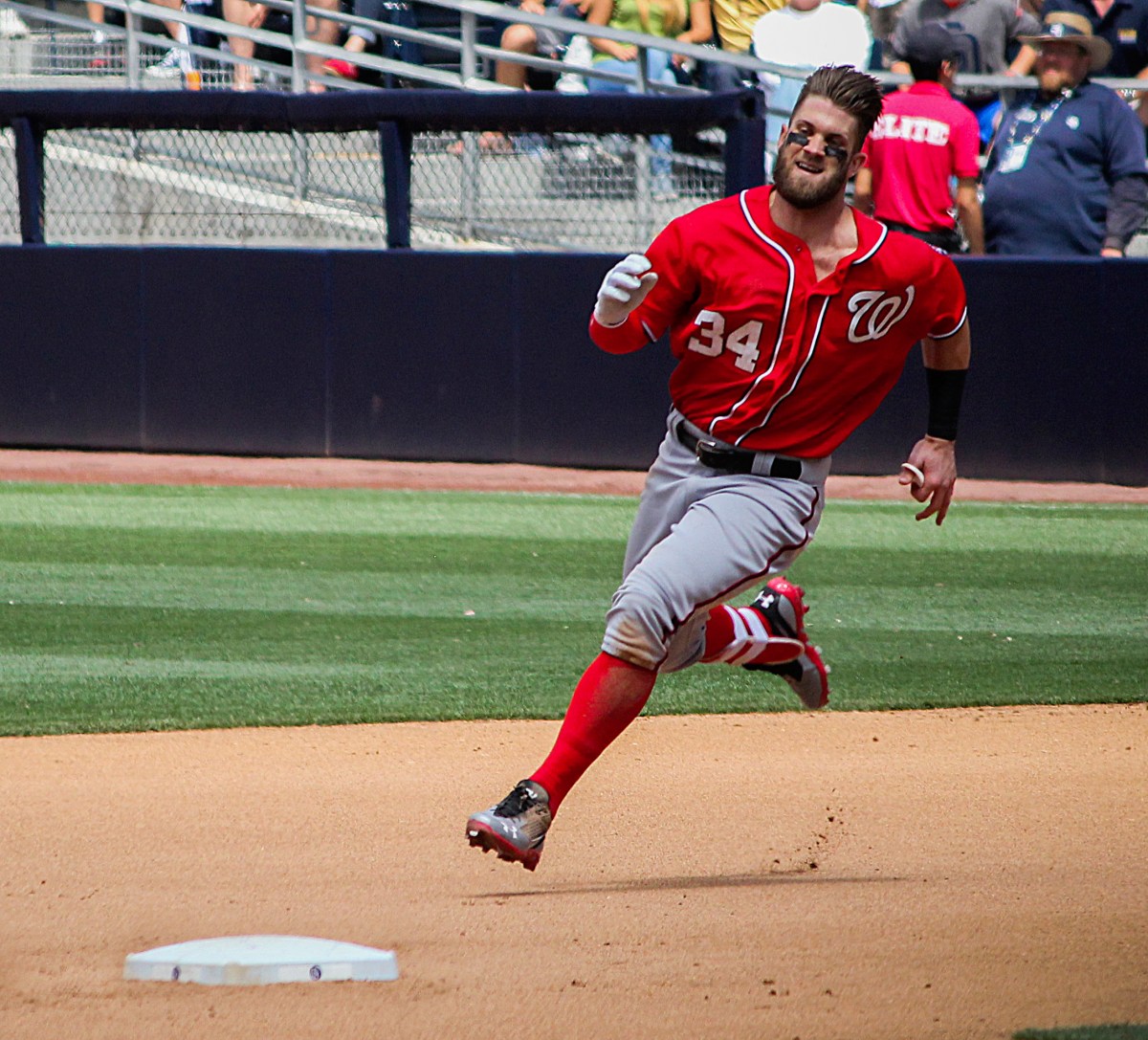
As I got into my early high school days, my pure admiration for players started to shift into thinking about how I could be like them. Bryce Harper was my guy when he broke into the league around my 8th grade year. His passion, grittiness and hair-on-fire intensity paired with his elite talent made me want to figure out how I could do what he did. I tried to replicate his intensity and tendencies at the plate, mimicking his stance, the intensity of his swing and even rocking with one batting glove just because he did it. I wanted to find the things he did well and incorporate them into my game. He was the beginning of me wanting to analyze major leaguers to aid in how I played.

I really laid into the analysis during high school and college as I dedicated myself more to pitching. When Max Scherzer signed with the Nationals, I had easy access to watch the best pitcher of the time work every five days. At face value, people would watch him for his elite competitiveness and his nasty pitches, but I wanted to learn more. I watched his sequencing, his approach, how he held runners, when he’d empty the tank and everything else I could pick up.

To learn from the best, you have to watch with a sense of curiosity that digs deeper than what the average fan pays attention to. By flipping on the television, you have a front row seat to watch the best movers. These are the players with elite pitches, that make elite plays and have elite swings. How are these players so damn good? There are so many nuances to pick up on in an MLB game. The action of the game doesn’t tell the entire story.

How do they prepare? Watch their first step on defense, their approaches in the field and at the plate, their between pitch routine. How do they create their focus? How do they make in-game adjustments? Watch the catcher’s pre-pitch movements and set up. Watch the adjustments the fielders make based on the hitter or the game situation and how they communicate. Watch the hitter’s preparation in the on-deck circle. Watch how long the pitcher holds with runners on base to keep the base runner uncomfortable.

If you play baseball but think it’s too boring to watch, you just don’t know what you’re looking for. There’s a massive learning opportunity in watching a game. You don’t have to pay for a lesson or work with a coach to gain this information. It stems from your curiosity in figuring out how you can take what the best of the best do and apply it to your own skill set. 

Categories
Blogs

Risk v Reward

In the finance world, people look for an investment that can net them a profit. They want a low-risk, high-reward opportunity that provides a large return. However, if we take this into the context of baseball, a successful baseball career would not be something an investor would look to put their money in to guarantee a profit.

Baseball requires a great amount of risk with a lower potential for achieving the reward. For example, a college roster has 45+ players competing for the nine spots on the field. The MLB has four levels (not counting rookie ball or the FGCL) of minor leaguers competing for the 40-man roster spot. Even at the high school level, strong conferences have eight or so teams of players all fighting for the all-district honors, and even more teams fighting for all-state honors.

No matter your goal in baseball, the cards are usually stacked against you. Rewards and roster spots are not handed out like participation trophies. You have to be willing to take on the risk and you have to be comfortable being uncomfortable with how tough it might be to achieve the reward. Because if you don’t work to find comfort with being uncomfortable, somebody else will.

Risk is the uncertainty that your investments will pay off, so you have to be comfortable investing the time, effort, and energy that you have to put into improving your skills. You are investing time to train, lift, throw or hit that you could spend hanging out with friends or family. You are trading late nights out with going to sleep early so you can recover well for the next day. By pushing yourself to do the extra reps on the field and in the weight room, you are risking your energy and effort. You are exhausting your focus and physical abilities to improve your baseball performance.

So why is it even worth the risk if the reward is so hard to achieve? Because that feeling of breaking through and reaching a goal is second-to-none when you know how much you risked to get there. The hard work, the roadblocks you hit along the way, the pain, the frustration, the moments when you wanted to quit but just kept going anyway. Those times of adversity you faced, while they were anything but enjoyable at the moment, make reaching your goal feel amazing because you know you deserved it.

I read a quote that says “winning is more fun than fun is fun” and I couldn’t agree more. You’ll have teammates who enjoy being on the field with friends, throwing, and taking some batting practice. Their “fun” will never truly reach the level of fun that comes with winning because they aren’t willing to risk what it takes to win.

Be the one that is willing to take the risks. There will be tough stretches along the way that you may not see an end to but don’t lose sight of the reward you are working for. The values you learn from taking these risks will grow you as a ballplayer and as a human being. It will make you mentally stronger as you continue your baseball journey and life outside the game.

Categories
Blogs

My Experience with Sports Performance Anxiety

Sports performance anxiety has always been a part of my life but I really didn’t understand how much of an impact it had on me. I dealt with it in some form throughout my high school experience but was never pushed to a point where it became overwhelming. However, once I got to college, my performance anxiety on the field took to a whole different level. It ended up being a bigger challenge than I ever expected and took a lot of learning and mental development to work through it.

In high school, I thought it was completely normal that every time before a test or a game (especially when I pitched) I was shaking with nervous energy. I feared being handed a test and knowing nothing, or going out on the field and getting absolutely rocked. However, the shaking and those negative feelings weren’t really a big deal because I usually ended up doing well. 

The shaking and the anxious thoughts felt like they went away right after I threw the first pitch because that gave me a stroke of confidence immediately. I was an honor roll student in the classroom and performed well on the mound. I faced Division 1 and pro-level talent consistently in high school and competed toe to toe with all of them. I didn’t really need to take the time to understand why my mind and body acted that way when I had to perform because I was able to just figure it out. 

College was a whole different ball game. I started off my freshman year strong in the fall. I made multiple starts on the mound in inter squads, throwing 4-5 innings each time showing my potential to earn a solid number of innings as a freshman that spring. The competition was higher across the board and I was stepping up to the challenge well. 

However, everything changed when I came back in the spring. It started off with some rocky bullpens that felt plain weird. Then, when I stepped on the mound for inter squads, that shaky feeling of anxiety would not go away. I was not even close to the zone, the ball felt completely foreign to me and my confidence was nowhere to be found. I remember one instance when I was throwing to live hitters with the batting turtle around the hitter at home plate and all I was thinking was “don’t throw it over the turtle.” It even got to the point where I was questioning my abilities just throwing with a partner.

My confidence was completely shot and throwing a baseball was a mental struggle every time. I felt like everybody’s eyes were on me. Every small mistake I made pushed me farther and farther away from touching the field. I tried to fight through this struggle by doing the same thing I did in high school. Nonetheless, I was never able to throw that first pitch that gave me a stroke of confidence. I kept trying that same strategy over and over because it was all I knew, which ended up wasting almost a year and a half of my collegiate career.

To get over my performance anxiety, I had to truly examine what it takes to be a strong competitor even when success was lackluster. It took longer than I would’ve liked to gain that confidence back, but there are a few keys that I picked up to overcome this battle. 

The first was understanding that one singular outing doesn’t make or break you. I put so much weight on myself when I threw to hitters or off a mound. I was so focused on having a good result that I didn’t even realize that what I was doing was merely the process. While there are times that pitching is a result (such as games), I had to understand that a majority of my work was a process. Processes aren’t achieved overnight and I had to trust that even my bad days were part of my development. This realization, along with conversations with my coaches and teammates, loosened me up in lower-pressure situations, like long tossing and bullpens, giving myself those moments back.

My second key was hammering home positive self-talk and actually believing it. My negative internal conversations were tailored around stuff such as “don’t miss the strike zone” or “don’t hit the batter,” aka the worst-case scenarios. I had to change my phrases to those that were built around confidence and success, practicing them and executing them immediately when I got into a game. As a reliever, the leash is extremely short, so I had to find a way to relax my mind and instill confidence with positive self-talk before I threw that first pitch. My phrases centered around reinforcing that I had fantastic preparation and that I was better than any hitter that came up to the plate—also sprinkling in a few expletives to get me fired up. 

The third and most important key was to figure out what mentality worked best for me. Pitchers like Max Scherzer look like they’ll rip your head off. Then there are pitchers like Stephen Strasburg, who looks so stoic and relaxed but can kick up the intensity when needed. Pitchers need different levels of intensity in order to maximize their performance. I originally tried to be the “bulldog” type because I loved the intensity of competition, but that didn’t benefit me at all. I was too uptight on each pitch and it increased my negative emotions when I didn’t execute or get the result I wanted. 

I found that my perfect mentality was being as relaxed and loose as possible, allowing myself to get comfortable with the game or performance. Once I got comfortable and gained the confidence, then I would kick it up a notch, thrive on the confidence, and ride the emotions. I needed to give myself time to build confidence in the first few pitches so I could utilize it later in my outing, as opposed to expecting perfection immediately and letting my disappointment that I wasn’t perfect drive it. This was by far the biggest realization that helped me improve my on-field performance and understand truly how to compete far past my college playing days.

Working through my performance anxiety was a very tough battle and it took a lot more than the keys I discussed. Tools like understanding the importance of breathing, creating release points on the field, and implementing mental imagery were also important factors in improving my performance. Struggling to perform certainly wasn’t an ideal situation to be in. But it forced me to truly learn about the challenges in the mental side of sports. Sports performance anxiety is real, so don’t ignore it because it may not go away on its own.

Categories
Blogs

Hate Losing

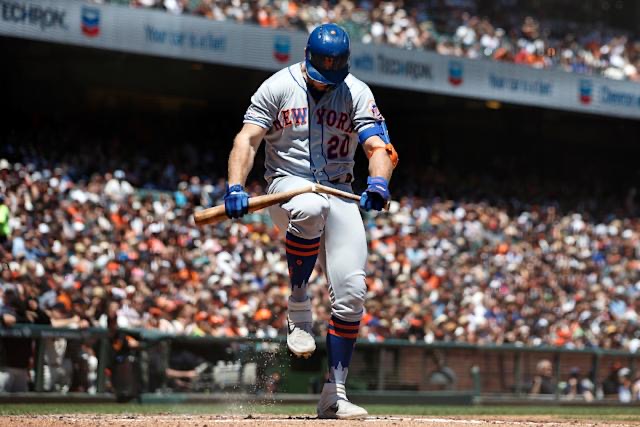
Photo by Jason O. Watson/Getty Images

In order to be an elite competitor, you have to hate losing more than you love winning. Everybody has heard that phrase before and seen what those elite competitors look like in games. Max Scherzer, Lance Lynn, or Clayton Keyshawn come to the top of my mind when I think about those types. However, truly “hating to lose” is rooted in your mentality and the way you train off the field, not just how you compete between the lines.

I translate “hating to lose” as not being content with inadequacy. At its bare bones, losing comes at the cost of a lack of preparation, focus, or skill, all of which can be controlled. If you truly hate to lose, you have to hold yourself to a standard that fights any inadequacies in your skill set. Creating this standard all starts with how you train and prepare for competition. If your bat is too slow through the zone, you work on creating a more efficient bat path and you get in the weight room. If you made a few errors on backhand ground balls, you take the extra reps to regain confidence in that play. 

Holding yourself to that standard is what promotes growth and develops you into a better ballplayer. The most destructive mindset you can have after a loss is being content or letting it “roll off your shoulders.” Not only does it allow you to be satisfied with the poor habits you repeat, but it takes away from the satisfaction of truly working for a victory and overcoming a weakness. You limit yourself from reaching a goal or your true potential.

In order to promote the appropriate growth and build the mindset of hating to lose, you need to incorporate competition into training. This is how elite athletes build their competitive drive, giving them the tools to withstand high-pressure situations. You could go head-to-head with another teammate or simulate competition by holding yourself accountable for executing certain tasks. You could compete in the weight room, in taking ground balls, in a bullpen, or anywhere else. While the stakes are lower in these style competitions than in a game, you’ll build that drive and desire to impose the appropriate level of focus to avoid losing. This training will prepare you for high stake competition. 

When translating this mentality of hating losing to a game setting, it’s important to understand that winning doesn’t give you a free pass to be content. Of course, you are allowed to enjoy victories, but a win could give you the false belief that everything is perfect. Even in a victory, there are still areas that require improvement and must be recognized.

You could go 2 for 4 with a game-winning hit, but you weren’t picking up the left-handed pitcher’s slider and swinging over it. While you picked up a multi-hit game and won the game, there are still areas to improve upon. Again, you can celebrate the strong performance because there was work put in that paid off, but you have to be able to realize the weakness and have the urge to attack it.

Hating to lose is a lot more than being mad when another team beats you. It’s about having the inner drive to outwork your competition. Everything can be viewed as a win and a loss. While the best competitors don’t necessarily think of everything as winning and losing, they know how to train, eat, sleep and perform like a winner. They aren’t pleased with anything less and challenge themselves to learn from their losses. 

So my question to you is what loss have you recently experienced and what can you learn? Trust me, there is one.

Categories
Blogs

Loving Baseball Pt. 2: How Baseball Will Love You

Your relationship with baseball heavily depends on the love that you put into it. We discussed different ways to show your love for baseball in my last blog post (link here). As you grow and strengthen your love for the game, the game will reciprocate that love back to you far beyond your playing days through those additional experiences that others, who didn’t put the work in, will not have. 

Baseball’s biggest way of reciprocating its love will be through the lifelong values it provides you. First, baseball will help you build a work ethic that translates to parts of life not even remotely connected to the game. It takes an immense amount of time, focus, and intent to continue your playing career. By prioritizing extra reps, focusing on your strength training, and spending more time around the game to watch and study it, you will grow a strong worth ethic that you will hold yourself to on and off the field.

That work ethic grown through baseball will make you more effective and dependable in your career, hobbies, family, and anything else you wish to pursue. Even the smallest things, like making a meeting on time, are positively impacted by your baseball experience.

The game will also teach you other very important lessons along the way. It will teach you to be patient, appreciate the moment, and that failure is a part of life. For example, controlling what you can control is the biggest lesson I took away from baseball, as uncontrollables can fog up your mind as a pitcher. Realizing and judging my actions based on what I can control brings me peace in my life on and off the field. 

 As a pitcher, I could throw a perfect slider on the black and still end up giving up a double. I had to give myself slack in those moments when the result wasn’t there but I executed my controllables to the best of my abilities. It taught me how to control my attitude, actions, and effort, along with developing healthy affirmations when the results don’t line up with the controllables.

Along with the lifelong values, the game will provide memories that will last a lifetime. The time you spend with your teammates and coaches on road trips, bus rides, rainouts, early morning lifts, late January practices or late nights in the hotel is priceless. If you ask any former college baseball player, they’ll tell you their college memories hardly come from the games or the stats they accumulated. They’ll remember the personalities of their teammates and the time they spent with them outside of the lines.

Your work ethic, the lessons you learn, and the memories from your playing days are all ways the game will love you back as an individual, shaping you to be a strong, well-rounded human. But, in my opinion, the most important way the game will love you is by impartingthe perspective and love for the game that you can share with the next generation. 

While it was really hard to leave my playing career behind, it has been so rewarding coaching athletes of all ages on how they can love the game. At the youth level, it’s showing them the fun and joy the game presents by just being around it. It’s about creating a base love that they can build upon as they progress into their teenage years. For the high schoolers I coach, it’s teaching them the nitty gritty of the sport: how to compete, communicate, respect each other, have confidence, and all the intangibles it takes to play at the next level.

Do you need to be a coach to share your love for the game with the next generation? Of course not. Parents, relatives, volunteers and others can be a positive influence. Young aspiring baseball players are very impressionable. Seeing a college or high school athlete who sets a good example of how to love baseball could positively impact their desire to love the game.

In the end, baseball is a balanced relationship: whatever you put into it you will get back.  You don’t have to be a player that earns All-American accolades, plays professionally, or gets a significant amount of playing time in college. If you give he game the love it deserves (as discussed in the last post) will grow into a powerful relationship that will last a lifetime.

Categories
Blogs

Loving Baseball Pt. 1: How to Love Baseball

When you look around at your teammates, are you sure that each one of them is there because they love baseball? The answer is probably yes! Most of them started playing the same way you did: their parents wanted them to play multiple sports and signed them up for tee ball or Little League. They continued to play because they loved the game as much as the game loved them. However, as years passed some teammates stopped playing. Not because they stopped loving the game, but because they didn’t love the game enough.

Teammates stop playing baseball for many reasons. They might love another sport, hobby or activity that ends up trumping their desire to play baseball entirely. Or they might totally fall out of love with the game and just remove themselves from baseball. These two reasons are driven by the realization that there are better options for them outside of baseball. This is completely fine. Looking back on my own experience, very few of my Little League teammates ended up quitting  for those two reasons. However, the most devastating reason people stop playing is because their love for the game doesn’t mature with the challenges the game presents as you get older.

Baseball loves everybody unconditionally. It wants to provide opportunities for you to continue playing for a long time. But, in order to reciprocate that love, you have to give more and more. If you compare the junior varsity to the varsity level in high school, there’s no doubt that kids on both teams love baseball. But you can tell the difference in the type of love that is given by the players that succeed.

Like any relationship (because loving baseball is a relationship), you have to put in extra time with an intent to grow the love. So how do you do that?

You show your love by having intent when you are throwing, hitting, fielding or working on any skill. By having a plan and focus when you are putting in extra work, as opposed to just taking reps for the sake of taking reps. You show your love by working out and getting stronger, both in-season but especially in the off-season. You show your love by spending more time around the game, whether it be pre/post practice reps, watching baseball or studying the game. Give yourself as many options as possible to get better each day, even if you don’t have access to a field.

 Do not be the guy that is “happy to be there.” That guy only shows up to practices and games. That guy will throw or hit every now and then. That guy will only think about baseball when it’s on the calendar. That guy will only love the game when it is convenient.

The guy that is just “happy to be there” will only get as far as his natural talent will get him. There are guys like that at the high school and even college level, and they may have loved the game enough to get there. However, once you accept that complacent mentality and choose to stop working to grow your love, you really miss out on what the game can give you.

If you strive to play college baseball and beyond, you have to love the game more than your teammates, friends and opponents. As your career advances, you’ll run into others that love the game just as much as you do and want to take everything that the game will give them. In order to succeed, you have to challenge yourself to continue showing and improving that love until you can’t anymore. If you continue to love the game the way it loves you, it will reward you as long as you wish to play and well after you hang up the cleats. It will reward you with a lifetime of love, memories and friendships that wouldn’t have been possible without baseball.

So, ask yourself, how much do you love baseball?

Categories
Blogs

Aggressive in the Zone

My main focus this year when working with my high school pitchers was getting ahead early and often. At every level of baseball, the worst innings usually happen when the pitcher falls behind in counts or walks hitters. This is especially true at the high school level, where pitchers tend to either get too picky with their spots or have trouble making adjustments to get back in the zone. To combat this issue, I attacked it from two different angles: emphasized the importance of early strikes and adjusted how our catchers set up.

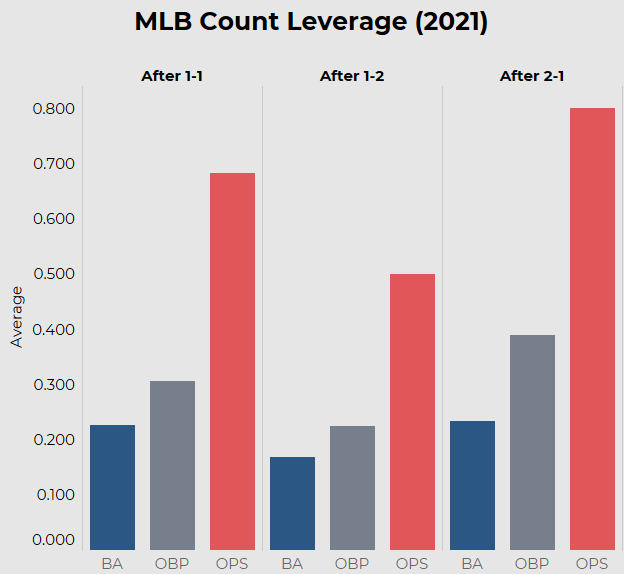
In college, we charted a statistic called “2 by 3s,” which is how many times the pitcher threw two strikes in the first three pitches. Combined with tracking first-pitch strikes, these two stats are great indicators of how aggressive our pitchers are early in the counts. In my opinion, the 1-1 count is the most important in an at bat because of how swayed the hitting statistics are based on the result of the following pitch. When looking at Major League Baseball data, that advantage is significant.

The graph below shows the batting average (BA), on base percentage (OBP), and on base plus slugging (OPS) after 1-1, 1-2, and 2-1 counts in the MLB during the 2021 season. After a 1-1 count, there is a .165 difference in OBP and a .302 difference in OPS. In a 1-2 count, a hitter’s BA drops to .169, which is 75 percentage points below the league average. The OPS difference stands out the most, as it shows that when the pitcher gets ahead, there is a lower chance that the batter reaches base and a lower chance the batter hits the ball hard/reaches via an extra base hit. Statistically, the 1-1 pitch is the most significant as the OPS difference is the greatest out of any single pitch, even beating the 0-0 pitch by over 90 percentage points.

Source: Baseball References

No matter the significance, this trend is present across all counts. But the significance of getting ahead early is prevalent as it decreases the risk of falling behind later in the count. With these statistics in mind, I challenged my pitchers this year to be fearless in getting two strikes in the first three pitches. That did not mean throwing pitches down the middle so they don’t miss the strike zone. I wanted them to be confident in their ability to work the inner and outer half of the plate.

However, I noticed that we were still running into issues of pitchers falling behind because they were not getting calls when they missed their target by small margins. Pitchers were getting the ball inside, which is a challenging location to be comfortable with as underclassmen, but were still missing too far inside or missing up in the zone. While the pitchers were being aggressive, maybe the catcher’s setup wasn’t maximizing their potential to get strikes on missed locations. 

An article by the Baltimore Sun discusses how the Baltimore Orioles’ catchers have been setting their initial target up down the middle of the plate this season as opposed to starting at their desired location. The whole idea was to get their pitchers ahead in the count and not focus on nitpicking their strikes or being too perfect. With this adjustment, the Orioles’ strike percentage had increased to 52.9% over the first two weeks of the 2022 season, which was the highest in the MLB and a higher percentage than any season for the Orioles since the beginning of the Statcast era in 2008.

This setup benefitted MLB pitchers because a lot of those arms have fastballs in the mid to upper 90s and plus off-speed pitches. Rather than pitching to corners and trying to be perfect, they would let the spin of the pitch work over the plate. Their pitchers still found themselves inducing weak contact, and getting swings and misses. While our high school pitchers don’t possess the tools of pro pitchers, high school hitters don’t have the tools of pro hitters either. By throwing a strike over the plate, there’s a higher chance a high school hitter will still get themselves out. 

With that in mind, I implemented a variation of what the Orioles did with our catchers. I had our catchers setup with their outside knees on the black so their entire body frame was on the plate, whether that be on the inner or outer third of the plate. That way we were guaranteed to get strikes within the frame of the catcher, the catcher could effectively reach the strike across the plate to steal missed spots, and, with a high school strike zone, we could still get calls on pitches just off the plate. When we got to two strikes, I allowed our catchers to expand and “get a little greedy.”

By combining the catchers setting up on the plate with our pitchers focused on being aggressive in the zone early, we achieved the results we were looking for. We were getting a higher percentage of first pitch strikes and 2 by 3s from our pitchers. While we were hitting our intended spots a little more, our misses were generating more strikes.

The comfort of getting those strikes allowed our pitchers to be more aggressive with their pitch usage. Many high school pitchers rely on throwing first pitch fastballs to get ahead and that’s what high school hitters expect. Building our pitchers’ confidence that they could get ahead early opened them up to trusting their off-speed pitches earlier in counts, or even a good fastball inside. There were very few times that our pitchers threw first pitch off-speed pitches that were hit hard. A majority of them were either taken/swung through for strikes or were weak contact.

Once they got ahead, I wanted our pitchers and catchers to be greedy and get their outs right away. They needed to go after the hitter with competitive two strike pitches, as opposed to the staple elevated fastball that sails too high (great pitch in theory, but not practiced enough to execute properly). Instead, they threw competitive off-speed pitches in the dirt or off the plate, and even tried to put guys away with fastballs just a little more outside. The combination of us getting ahead early and a high school umpire’s tendency to give at least a ball off the plate, allowed us to execute fastballs out of the zone to get our outs.

My number one goal with any pitcher is to set them up to be confident when they step on the mound. Confidence is built in preparation and past success. By emphasizing being aggressive in the zone during mound work/pre-game bullpens, they prepare themselves for success. Once they execute working ahead in counts consistently and feel comfortable doing so, they gain that confidence. Overall, these tactics increased our pitchers’ confidence so they could continue to be aggressive outing after outing.

Categories
Blogs

Avoiding the Big Inning

When I played in college, one statistic we tracked during games was the number of innings in which we gave up one or fewer runs. We believed that by only seeing 1s and 0s on the scoreboard, we’d put our team in a great position to win. I’ve seen that idea ring true with really any other team I’ve coached or played for. Avoiding those disastrous “big innings” puts your team in a much better position to win. It takes a lot of internal awareness to “plug the leak” in an inning that’s getting out of hand because you could really win or lose a game with one crooked inning.

 As a pitcher, sometimes it seems like these big innings happen in the blink of an eye. I remember pitching in a summer league after my freshman year of college. I had been putting up quality outings all summer except for this one game where I gave up nine runs in an inning. I got through the first two innings without a problem. The third started with giving up some free bases to the bottom hitters, flipping it to the top of the lineup, and then the flood gates opened up.

In that situation, I felt like the big inning just ended up happening before I even knew what was going on. That excuse is common among many pitchers, which is why thinking that “it just happened” is one of the biggest reasons big innings occur. It means the pitcher lost awareness of the situation and really didn’t do anything in that moment to make any adjustments. It makes it sound like the pitcher had nothing to do with the inning and everything just happened to them. If a pitcher relinquishes control of the game like that, a big inning is bound to happen.

There are many factors that lead to the loss of awareness for the pitcher. Negative self-talk could develop when there’s traffic on the bases or multiple runs scored. Their focus could shift primarily to external factors, like errors, runners on base, hard-hit balls, or bloopers, removing their focus on the task at hand. Their mechanics could start breaking down because you’re thinking about working quickly or “just trying to throw strikes.”

There is one similarity between these factors: they are thoughts and behaviors. None of what I listed is based on performance or results, but just what precedes the outcome of giving up a big inning. There will be times when you will get beat in a spot with runners on base and give up multiple runs in an inning. But it’s all about how you respond to that adversity. 

So how can we better equip ourselves when we can sense a big inning happening or a high-pressure situation coming? To combat the “it just happened” thought, the most important action is to step off the mound and recapture the tempo of the game. Remove yourself from the larger task. Instead of thinking about getting out of the inning with no runs, focus on executing your next pitch. Once you step back on the mound and throw your pitch, plan and execute the pitch after that. This helps you focus on the process and executing subtasks, slowly chipping away at completing the inning

If you find your internal conversation becoming negative, flip the perspective on the dialogue. If there’s a tough-luck hit or error, remind yourself that you executed your pitch and bad luck just happens. If the umpire makes a bad call, redirect your focus to what you can control, which is the next pitch. If you just gave up multiple runs, analyze and adjust your process however necessary then focus on that adjustment. The idea that baseball players need to have short-term memories is vital in limiting a big inning from becoming even bigger.

A single big inning can be deadly in a baseball game. It can put a lead out of reach, swing momentum to the other dugout, or just knock the wind out of your team. Nobody likes being that guy standing on the mound with a crooked number on the scoreboard. Being able to remove yourself mentally, take control of the tempo and adjust your self-talk before those innings get out of hand will help minimize any potential damage and keep your team in the game!

Categories
Blogs

FOCUS

In any competition, maximum focus is necessary to ensure the highest quality of performance. In a sport like baseball that some people describe as “slow” and “uneventful” (everybody has their own opinion, but they are wrong), focus is still necessary for high-stress situations. We have complete control over our focus. Understanding the different levels of focus and how to train your focus will improve your performance in the heat of competition.

Your level of focus directly correlates with the potential of action or the level of stress in a situation. Mistakes happen primarily when our focus does not line up with the situation. Your preparation, skill, and ability have nothing to do with those mistakes. It is purely the focus. This applies to more than baseball.

In aviation, for example, there is a rule related to focus called the cockpit rule. In 1981, the Federal Aviation Administration (FAA) reviewed a series of accidents caused by the flight crew being distracted from flying duties. They found that a majority of accidents happened below 10,000 feet, the most critical part of the flight, due to “non-essential conversations” and activities. As a result, the FAA imposed this rule, stating that only conversations related to the flight itself are allowed below 10,000 feet to ensure the highest focus during essential action. When an airplane surpasses 10,000 feet, conversations can relax since there is a low chance of error.

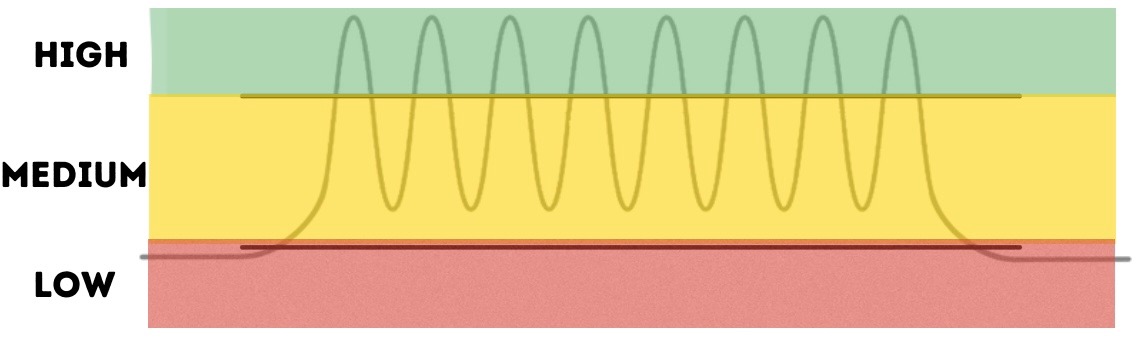
So how can this rule relate to baseball? Both aviation and baseball have times of high focus and low/medium focus, even if they flow differently. When you are in those essential situations in baseball, you need to hold your focus accountable just like a pilot. Stepping in the box, getting on the rubber, or prepping for the pitch in the field is the equivalent of being under 10,000 feet when flying a plane. Those moments require 100% of our attention to minimize error.

The medium focus moments are the other time we are in the field in between pitches. We still need to assess the last pitch, have conversations with ourselves to prepare for the next pitch, and come back to high focus, but there is a lesser chance of immediate error. For comparison, medium focus when flying a plane is at cruising altitude: it is the smoothest part of the flight, but issues like turbulence can still come up.

Low focus moments are in between innings or when you are not involved in the game. As a pilot, the equivalent is the plane on the ground and at the gate. In both examples, there are no errors to make because it is in between the essential action.

Flow of focus in baseball (top) versus aviation (bottom)

Being able to hone in your focus in high-intensity situations looks like it just happens for the best of the best. Pitchers like Max Scherzer and Justin Verlander can turn it up to a different level in the backend of their starts when fatigue sets in and the outs are more important. However, players like them do not get to that level of focus overnight. 

Just like any skill, quality repetitions and practice helped them improve their focus. Low-risk reps, such as throwing a bullpen, taking batting practice, or fielding ground balls, can be used to hone your in-game focus. Hold yourself accountable. Use these times to train your focus by practicing quick adjustments in low-pressure situations so you are prepared to make them in high-pressure ones. 

Let’s say you are throwing a bullpen and you want to work on executing your offspeed pitch late in counts. You need to put yourself in that game-like mindset, envisioning the batter in the box staring you down and the catcher flashing you signs. Focus on your breathing, cues, and self-talk to make sure you execute that pitch with a game-level intensity. You have time in that bullpen to work on hitting your spot, but once you get in a game, you have one chance to execute a 1-2 offspeed pitch in the 7th inning with the bases loaded. Focusing and throwing four well-executed offspeed pitches in a bullpen is a lot better than throwing ten pitches in one minute.

Different moments in a game require different levels of focus. You do not need to be 100% focused the entire time. Honestly, that is just a waste of energy. However, as I have said over and over so far, we have to be able to turn it up when the situation calls. By practicing and understanding your level of focus, it will subconsciously increase when the moment calls for it, priming you for success.

Categories
Blogs

Fear of Failure

Failure is inevitable in sports, work, school, and every other part of life. People either fail because of external factors, such as the environment or competition, or internal factors. Lack of persistence, discipline, or knowledge are great examples of internal factors that lead to failure. However, some people are fully equipped with the persistence, discipline, and knowledge to succeed, but are held back by their fear of failure.

The fear of failure will repress any positive attributes you do have and limit the effort you give when playing in a game or working towards a goal. For example, let’s say you are a shortstop and a ball is hit up the middle. The ball is on the edge of your range –  you will have to dive to make an above-average play to field the ball – but it’s well within your capabilities. Your pre-pitch preparation is perfect, you react to the ball off the bat and take a good angle to field it, but at the last minute, you hold back and lunge rather than dive. And you miss the ball by six inches. Did you try your best to field the ball? No.

Do you think you would have fielded the ball if you gave your full effort and dove? You will never know because you did not give yourself the chance to find out. Missing the ground ball was not due to a lack of talent; everything was perfect leading up to that last moment. That fear of failure never gave you the opportunity to find out if your talent and capabilities would allow you to field that ball. In the moments after the ball goes to the outfield, you are probably thinking that you failed in fielding the ground ball. I would argue that you did not fail and really can’t be frustrated at yourself for failure because you did not even try.

Success only comes from vulnerability. When you put yourself in situations where you have something to lose and you give maximum effort, then you allow yourself to be successful. If your goal in the offseason is to throw 80 mph, your vulnerability will come from the time and effort you put into training towards that goal, knowing that you could potentially fall short. Are you choosing to hang out with friends, eat junk food, and stay up late playing video games? Or are you choosing to put time into training, eat healthily and get enough sleep to recover?

The continuous effort is the fearlessness you need. That way once it is time to assess your goal, you can truly determine if you succeeded or failed. The worst feeling in the world is looking back after not achieving a goal or making a play in a game/practice and thinking “maybe I could have done more.” As the saying goes, hindsight is always 20-20.

You must be fearless in the eyes of failure if you want to succeed. There will be many high-pressure situations in games, and even practices or tryouts, where failure is staring you in the face. You have two options: not give your full effort and increase the likelihood of failure, or be vulnerable to failure and allow yourself to truly determine if you are capable of success. You might not field that ground ball, but you will never know if you do not try.