
Categories
Blogs

Risk v Reward

In the finance world, people look for an investment that can net them a profit. They want a low-risk, high-reward opportunity that provides a large return. However, if we take this into the context of baseball, a successful baseball career would not be something an investor would look to put their money in to guarantee a profit.

Baseball requires a great amount of risk with a lower potential for achieving the reward. For example, a college roster has 45+ players competing for the nine spots on the field. The MLB has four levels (not counting rookie ball or the FGCL) of minor leaguers competing for the 40-man roster spot. Even at the high school level, strong conferences have eight or so teams of players all fighting for the all-district honors, and even more teams fighting for all-state honors.

No matter your goal in baseball, the cards are usually stacked against you. Rewards and roster spots are not handed out like participation trophies. You have to be willing to take on the risk and you have to be comfortable being uncomfortable with how tough it might be to achieve the reward. Because if you don’t work to find comfort with being uncomfortable, somebody else will.

Risk is the uncertainty that your investments will pay off, so you have to be comfortable investing the time, effort, and energy that you have to put into improving your skills. You are investing time to train, lift, throw or hit that you could spend hanging out with friends or family. You are trading late nights out with going to sleep early so you can recover well for the next day. By pushing yourself to do the extra reps on the field and in the weight room, you are risking your energy and effort. You are exhausting your focus and physical abilities to improve your baseball performance.

So why is it even worth the risk if the reward is so hard to achieve? Because that feeling of breaking through and reaching a goal is second-to-none when you know how much you risked to get there. The hard work, the roadblocks you hit along the way, the pain, the frustration, the moments when you wanted to quit but just kept going anyway. Those times of adversity you faced, while they were anything but enjoyable at the moment, make reaching your goal feel amazing because you know you deserved it.

I read a quote that says “winning is more fun than fun is fun” and I couldn’t agree more. You’ll have teammates who enjoy being on the field with friends, throwing, and taking some batting practice. Their “fun” will never truly reach the level of fun that comes with winning because they aren’t willing to risk what it takes to win.

Be the one that is willing to take the risks. There will be tough stretches along the way that you may not see an end to but don’t lose sight of the reward you are working for. The values you learn from taking these risks will grow you as a ballplayer and as a human being. It will make you mentally stronger as you continue your baseball journey and life outside the game.
Categories
Blogs

Utilizing Technology in Recruiting

As a high school baseball player with aspirations to play at the next level, you need to go through the process of getting yourself on the radar of colleges. While the means of getting recruited have changed, the concept is still very simple: you are trying to sell yourself to a coach that you fit their program. Consider yourself a sales person selling yourself to the buyer, which is a coach.

You want to provide information to the coach that answers their questions of why you should be in their program. There are many different markets to sell yourself to, which are the different programs that are looking for certain metrics/data in order to find their players. The more relevant and in-depth data you provide, the more likely you are to hear back and move forward with the recruiting process. 

When I was trying to sell myself back in 2015, there were very limited resources I could utilize but I used every single one. As a pitcher, my emails to coaches consisted of my pitching velocity, height, weight and an iMovie quality recruiting video. At that time, I was using the same tools everyone else provided to coaches in order to be competitive with other baseball players trying to sell themselves in the same market.

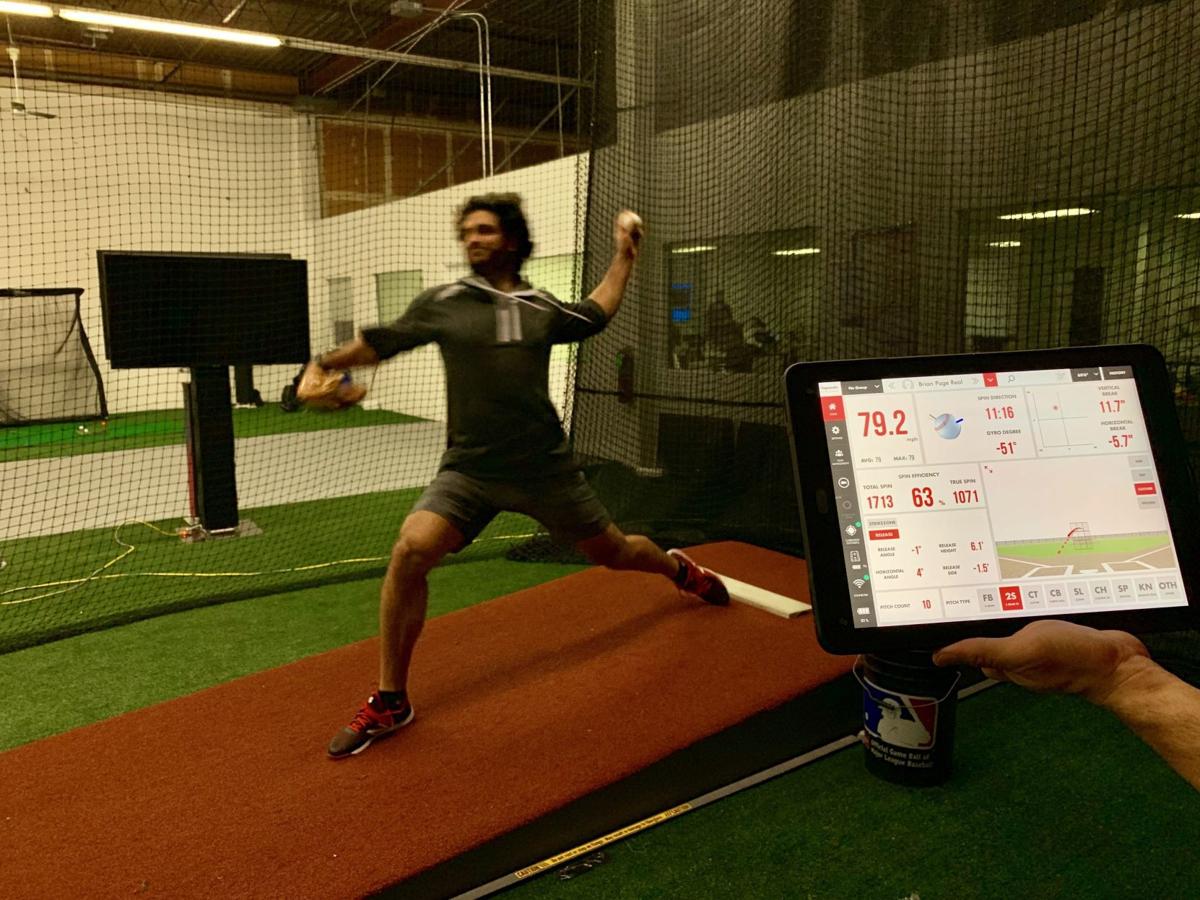
Jumping ahead to 2021, sales techniques have evolved dramatically. The evolution in sales techniques for recruiting is due to the emergence and mass availability of data-collecting technology, such as Rapsodo, Hitrax, Blast, Pocket Radars, etc. You can now find these tools at training facilities and colleges across the country, so why not utilize them for your recruiting? Chances are other athletes fighting for that recruiting spot are doing the same thing.

There are many benefits to adding data gathered by these tools to both your recruiting messages and emails. Primarily, it gives the coaches a ton of your data at their fingertips without having to gather it themselves. As a pitcher, you can provide your pitch velocity, spin rate, spin efficiency, vertical and horizontal movement all attached to a video referencing the pitch. As a hitter, you can provide your exit velocity, max distance, bat speed, and so many more metrics. Now, without even having to watch you play, they have a feel for your base metrics.

This leads into the second benefit – the coaches’ familiarity with all of these metrics and technology. Coaches have a lot of experience utilizing these tools within their own program. As a result, they know the metrics and qualities that they are looking for when recruiting. While sending a coach your pitching velocity with a video of the three pitches you throw can be okay, sending a Rapsodo report of multiple bullpen sessions provides a lot more useful information for that coach to utilize. By comparing these qualities to the data they’ve seen from players in their conference or in their program, they can determine if you are fit for their team.

Overall, providing relevant data from these credible tools will grab the attention of coaches. While they will still need to watch you play in person and contact your current coaches to get a feel for the type of player you are, utilizing these tools is the most effective first step in reaching out to a program you’re interested in. Recruiting continues to evolve with the increase in technology, so in order to maximize your chances to play at the next level, your recruiting strategy must evolve too.