
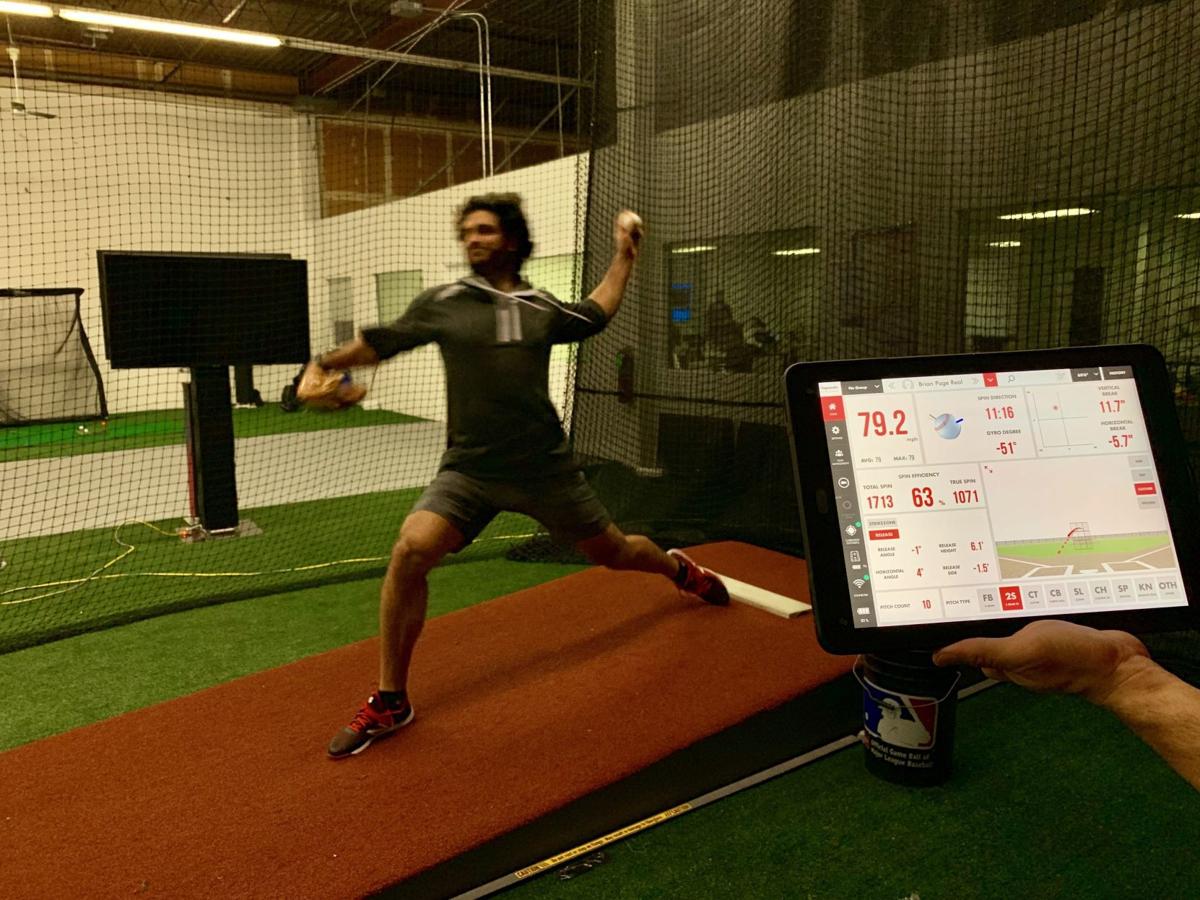
Utilizing cues when presented with mechanical flaws in training or subpar in-game performance are key to making adjustments without overbearing the mind. The number of things that can go wrong in a pitcher’s mechanics is mind boggling. Dr. Greg Rose for OnBase U describes TWELVE different deficiencies that could negatively impact the maximum output of a pitch. While there are many ways to go about fixing these flaws, a simple cue, whether internal or external, can help a pitcher make something “click” and be used many times over.
There are two types of cues: internal and external. Internal cues are focused towards the process of your body to execute a movement. Example cues would include sitting into your hip or extending your glove to your target. While these are simple thoughts, they fix important parts of the mechanics without having to overthink about them specifically. Sitting into your hip would be a good cue for somebody who does not hinge well or gets out in front.
External cues are focused more on the result after the ball is released. Once we achieve the result, we work backwards to determine the mechanical adjustment made or the “feel” of the throw. Examples of external cues would be to throw through the catcher or to spike the off-speed pitch. Just like the internal cues, these fix important parts of your mechanics without overthinking. These are both good cues for pitchers that fly open early and do not get to extension, whether it be on their fastball or off-speed pitches.
It is important that a pitcher utilizes cues when training because they are not a one size fits all situation. For a pitcher that leaks their front side, a cue based on their glove might “click” while another pitcher might understand a cue focused on their elbow or hip. These are two totally separate cues and, if they work, they will get the same positive result.
In the end, the whole point of training and understanding what cues work for a pitcher are so they can be utilized in games. Adjustments NEED to be made pitch to pitch in order to maximize success. Making three or four bad pitches in a row because the pitcher is not adjusting towards their cues can change the flow of an inning or even an entire outing.
Cues are great in this setting because they allow the pitcher to focus on just one or two aspects of their mechanics. This minimizes the thinking that goes into making mechanical changes and the pitcher can continue the flow of their motion without breaking it down too in depth. It could be as simple as a quick reminder to yourself that goes like “stay over the rubber” if you’re falling forward. If you watch an MLB pitcher, you see these cues and reminders being reinforced all the time.
Internal and external cues apply to every sport, not just baseball, because each sport has a mechanical aspect. The block of a lineman in football, the jump shot in basketball and the power clean for an olympic lifter all require fluid mechanics in order to produce the correct result consistently. Athletes in each sport utilizes some form of internal and/or external cues, train them everyday and implement them in competition. The focus and conviction to these cues is one of the many things that make the best stand out.






 Painting Corners Blog