Categories
Blogs

Mental Reset: How to Bounce Back After a Bad Start

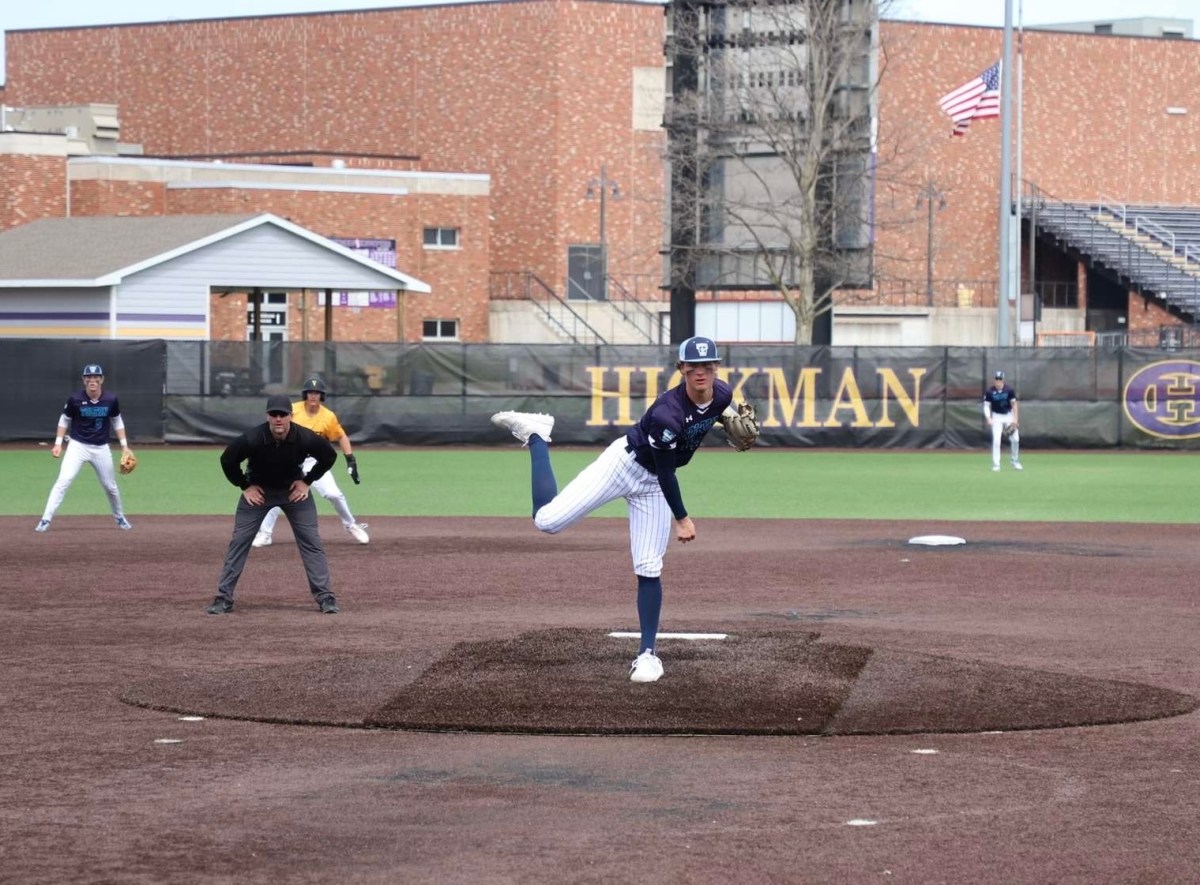
Picture this: You walk the first two batters of the game. The next hitter ropes a double into the gap, then you give up a single, and before you know it, you’re down 3–0 in the first inning. The mound feels smaller, you’re questioning that next pitch and every mistake feels magnified.

Sound familiar?

Here’s the truth: every pitcher, at every level, has had a bad start. MLB aces, college studs, and that kid who punched out 15 in a travel ball game last week have all had games where nothing seemed to click. What separates good pitchers from great ones isn’t avoiding bad starts altogether, it’s knowing how to reset and bounce back.

Baseball is a game of failure. Pitchers will make mistakes, hitters will capitalize, and sometimes nerves just get in the way. For high school pitchers, common causes include but are not limited to:

  • Rushing their mechanics
  • Nerves in a big game
  • A bad warm-up routine
  • Letting one mistake turn into two or three

But here’s the key: it’s not the first inning that defines you—it’s how you respond from there. When pitchers don’t reset, things often spiral. Frustration turns into loss of focus. Mechanics break down. Body language slumps. And suddenly, a rough first inning becomes an early exit.

Think about it from the other side: hitters and coaches can see when you’re unraveling, especially at the younger levels because a lot of athletes let their negative emotions show. Shoulder drop, eyes roll, pace quickens and general frustration kicks in. That body language tells everyone you’re beaten, even if nothing really bad has even happened.

That’s why a mental reset plan is so important as soon as possible. Here are four tools you can use to hit the reset button, even when the game feels like it’s slipping:

  1. Breathing routine/taking an intentional breath
    To slow the game down, you first must know how to slow yourself down. A deep, intentional breath in and out slows your heart rate down, recenters your focus and enables you to “check in” with yourself to see if you are in control, and helps release negative thinking
  2. Body language check
    How is your posture? Shoulders back, chest out, head tall. Even if you don’t feel confident, faking and acting confident will put you in a better position to be confident.
  3. Return to a pitch-by-pitch mentality
    The past is the past…lock in on the next pitch and focus on executing one pitch at a time. The task directly ahead of us is the most important. If you don’t win that pitch, focus on winning the next one.
  4. Implement your own personal reset/release
    Develop a routine to symbolically “release” negative thoughts or feelings…pick up dirt and throw it away, relax your arms and throw the ball in the air, wipe away dirt with your foot. That simple act can break the cycle of frustration.

MLB pitchers face this all the time. Max Scherzer has given up four runs in the first inning and still battled through six. Tarik Skubal has had games where his command wasn’t sharp early, but he adjusted and gave his team a chance to win. The difference isn’t mechanics, it’s mentality. They refuse to let one inning or a bad day dictate the game.

If pitchers at the highest level can bounce back in front of 40,000 fans, you can bounce back in front of a high school crowd.

Every pitcher will face bad starts. What separates you is how you respond. The best pitchers compete through adversity, use reset tools, and learn from the experience instead of spiraling. So next time things aren’t going your way, try one of these reset strategies. Breathe, reset, and attack the next pitch. Bouncing back isn’t just about saving one game, it’s about proving to yourself, your team, and the hitter in the box that you’re never out of the fight.
Categories
Blogs

How to Set the Right Summer Goals for Real Development

Summer is one of the best times to make big jumps as a baseball player. You’ve got more flexibility, more game reps, more chances to train on your own — but just having the opportunity to get better doesn’t guarantee you will. If you want to actually maximize your development, you need more than just a busy schedule. You need a plan. You need a goal. And you need to know what success actually looks like.

It all starts with setting the right goal. A good goal is something that’s Specific, Measurable, Attainable, Relevant, and Time-Bound (SMART). You’re not just saying “I want to get better.” You’re saying what you want to improve, how you’ll measure it, and you’re setting a realistic timeline to get there. A solid, realistic summer goal might be gaining a few miles per hour, developing an off-speed pitch you can trust in games, or improving your in-game mental approach and confidence. If you’re going into your summer season without that level of clarity, how do you even know what you’re trying to accomplish? You might get a little better just from showing up and competing, but your progress is capped without real direction. It’s like taking swings without aiming for a target — you’ll hit something eventually, but you probably won’t hit what matters most.

Your goal doesn’t have to be complicated, but it does need to be specific and focused. Once you know what you want to accomplish, you can actually define what success looks like and start building toward it.

After you set your goal, you need to map out appropriate benchmarks to track your progress. Let’s say you want to develop a curveball this summer. Your first benchmark might be the shape of the pitch — are you getting the movement profile you want? Next, you might focus on location — can you consistently throw it for a strike or spot it to a specific quadrant? Finally, you’ll want to track execution — can you actually throw it effectively in game situations? Without those benchmarks, it’s easy to feel like you’re working hard but not really know if you’re getting anywhere.

And this is where most players — and even some coaches — fall short. Setting the goal and tracking progress is one thing. But the most important part is realistically assessing where you’re at and adjusting as you go. The summer can fly by so fast that you can lose track of where you’re at. I recommend players assess their goals at least every other week. This gives you enough time to see real progress, but still keeps you on pace to make meaningful adjustments to your process and training when you need to. A simple self-check format works: “What’s going well? What’s not? What needs adjusting?”

One of the best ways to track this is by journaling. When I was training in the summer, I would write down everything I did — tracking the type of day it was (gameday, bullpen, recovery day, etc.), what I did well and why, what felt off and why, and what I needed to adjust going forward. Keeping a journal helps you stay honest with yourself, gives you a clear picture of your process, and lets you look back at what actually worked.

And this is the hardest part — the part a lot of players struggle with. It’s frustrating when things don’t click right away. It’s discouraging when progress stalls. But development is not supposed to be a straight line. There are going to be setbacks, rough outings, and days where you feel like you’re going backward. The key is understanding that if your plan is solid, and if you keep showing up and adjusting when needed, you will work through it.

The summer is full of opportunity. You can play more games, you can train on your own schedule, and you can focus on what you really need. But if you’re just hoping to “get better” without defining what that actually means, you’re leaving a lot on the table.

Set a clear goal. Track it. Adjust when you need to. Journal it. Stay honest with yourself. That’s how you win the summer.

Categories
Blogs

Learn to Pitch with Your Fastball

I’ve been working with high school pitchers for the last five years, and the one thing I see over and over again—especially in bullpens or games when things start getting competitive—is guys reaching for their offspeed way too early. We all love a nasty slider or a big 12-6 curve, but here’s the truth: if you want to be a legit pitcher, not just a thrower, you’ve got to learn to pitch with your fastball first.

Let’s be real. Most of you have maybe one or two offspeed pitches that you feel good about, and even then, they don’t always show up every game. So why are we so eager to toss them right away? You get ahead 0-1 or 0-2, and instead of doubling down with intent, you go straight to the breaking ball. That might work against weaker hitters but against good lineups? They’ll sit offspeed, foul it off, or take it—and now you’re back in a battle.

Here’s the thing: your fastball can be your best offspeed pitch. Let me explain.

When you move your fastball around the zone—away, in, up—you’re changing the look, the timing, and the hitter’s comfort. That’s effective velocity. A fastball at the letters might be the same mph on the radar gun as one at the knees, but it plays quicker. A fastball in might jam a hitter even if they’re on time. Throwing inside, especially in 0-1 counts, is one of the most underused weapons in high school baseball. Most hitters are diving over the plate, looking for that outer-third cookie. Show them something in, and you change their approach for the rest of the at-bat.

That said—there’s a time and place to break out the offspeed, and knowing when is what separates dudes who are just throwing from guys who know how to pitch. If hitters start to time up your fastball and get their swing off early, you’ve got to mix it up. You might need to break the rhythm if you’re in a high-stress situation or facing an absolute dude. And sometimes, when you’re absolutely overpowering a hitter, that’s the perfect moment to flip in a breaker to lock it in and mess with their timing even more. Offspeed is a weapon, but it’s only really sharp when used at the right time.

Next time you’re on the mound, challenge yourself. Ride your fastball as long as you can. Pitch with it. Command it. Move it around. Make it your go-to. Because the guys who learn to do that are the ones who separate themselves when everyone else is spinning sliders in advantage counts.

Trust your stuff. Ride the heater. Be the guy who pitches with purpose.

Categories
Blogs

Get It Done: The Difference Between 0-2, 1-2, and 2-2 Counts

If you’ve ever had a hitter down 0-2 or 1-2 and somehow still managed to walk him, you know the feeling: it sucks. It’s frustrating. You did the hard part, but you didn’t finish the job. That’s why it’s so important for high school pitchers to really understand the differences between 0-2, 1-2, and 2-2 counts — and how to attack each one.

You’re in the driver’s seat when you’re ahead 0-2 or 1-2. You’ve already beaten the hitter. Now you just need to finish the job. But here’s where many young pitchers go wrong: they think finishing the job means throwing their nastiest pitch as hard as possible. Slider in the other batter’s box. Fastball above the umpire’s head. “Maybe he’ll chase it,” they think.

No. That’s not pitching with intent — that’s hoping for a result.

When you’re ahead 0-2 or 1-2, your mindset should be about executing the pitcher’s pitches, not chasing strikeouts. Expand the zone slightly, change speeds, show something that looks hittable but isn’t — but stay under control. Have some pride — if you’ve gotten a guy into a 0-2 or 1-2 count, put him away by executing real pitches with real intent. Don’t let a good at-bat slip away because you got greedy and tried to be a highlight reel. Executing a pitcher’s pitch will get you the result you want.

One thing I like to track with pitchers is how many batters you retire within two pitches after getting to 0-2 or 1-2. You’re dominating the game if you’re finishing hitters quickly and efficiently. If you’re dragging out at-bats, you’re missing opportunities and running up your pitch count for no reason.

Now, when you get to 2-2, the mentality shifts a little bit. You still have a buffer before ball four — but you’re flirting with trouble if you get too fine. At 2-2, we’re not out there hunting strikeouts anymore. We’re trying to get the batter out right then and there. If it results in a punchout, awesome. But the goal is an OUT. Weak contact, flyout, strikeout, whatever. Just don’t fall into the trap of thinking, “Now I have to make the nastiest pitch I’ve ever thrown,” and end up walking the guy because you missed badly.

At 2-2, you need to trust your stuff in the zone. Attack. Make the hitter earn his way on base; don’t hand it to him with a full count and a walk. The best pitchers are the ones who can consistently get outs at 2-2 without letting the at-bat get away from them.

The bottom line is this: pitching isn’t about looking nasty or throwing the sickest pitch you can imagine. It’s about being smart, being in control, and finishing when you’re ahead. Next time you get a hitter to 0-2 or 1-2, have some pride and get your strikeout, or you’re out right then and there. And if you’re at 2-2, lock in, attack, and finish the at-bat before it gets ugly.

If you want a simple way to hold yourself accountable, start tracking how often you get hitters out within two pitches of getting to 0-2 or 1-2. See where you’re at after a few starts. You’ll be surprised how much better you’ll pitch when you focus on dominating those counts instead of just surviving them.

Categories
Blogs

Experience is a Benefit but Not a Requirement: The Role of Preparation in Building Confidence

Confidence is often tied to experience, but past success isn’t always available, especially when trying something new. For athletes, this is clear during the offseason when they develop new skills and push their limits. Without prior success to lean on, preparation becomes the foundation of confidence, proving that while experience helps, it’s not a requirement for success.

Past success can be a powerful driver of confidence. When you’ve accomplished something before, it reinforces your belief in your ability to do it again. For example, a pitcher who has consistently struck out batters in the past will naturally feel more confident taking the mound. However, there are times when you’re faced with situations where there is no track record to draw upon—perhaps you’re trying a new pitch or playing at a higher level of competition. In these cases, past success, while helpful, becomes irrelevant.

Preparation fills the gap when past success isn’t available. It’s about deliberate effort—putting in the time to practice, refine skills, and plan for success. Preparation builds confidence by ensuring that, even without prior experience, you’ve done everything possible to be ready. It’s the steady work behind the scenes that creates a foundation for trust in yourself when the pressure is on.

Every offseason, athletes face a unique challenge: they’re working on new skills, but those skills are untested in live game situations. Maybe they’ve spent months perfecting a swing adjustment or developing a new pitch. While they’ve trained hard, they haven’t yet seen results under real-world conditions. This can create doubt, as they have no past success with these improvements to fall back on.

This is where preparation becomes crucial. Trusting the process—the hours of practice, the repetitions, the discipline—helps bridge the gap between potential and performance. A great example is a high school player making their varsity debut. They have no experience above JV or travel baseball, but their preparation during practice and scrimmages gives them the tools to succeed. Even without past success, their preparation allows them to believe in their ability to perform.

There are a few practical strategies that athletes can use to trust their preparation. The first is shifting your mindset to embrace discomfort and view it as a part of growth. Confidence doesn’t always come from knowing you’ll succeed; it comes from trusting that you’re prepared to give your best effort.

Another strategy is focusing on the controllables. Preparation is entirely within your control. You can’t predict the outcome of a game, but you can control how much effort you put into workouts, drills, and mental preparation. This focus builds internal confidence, independent of external results.

Lastly, visualization and mental imaging is a powerful tool for bridging the gap between preparation and performance. Athletes can mentally rehearse game situations, imagining themselves successfully using their new skills. This not only builds familiarity but also creates a sense of readiness for when the real moment arrives.

Experience is valuable, but it’s not always necessary. Confidence doesn’t have to come from having done something before; it can come from trusting the preparation that got you ready. Whether you’re an athlete facing your first game of the season or anyone stepping into a new challenge, success comes not from the past but from the work you’ve put in to prepare. When the moment arrives, trust the process, and let your preparation pave the way.

Categories
Blogs

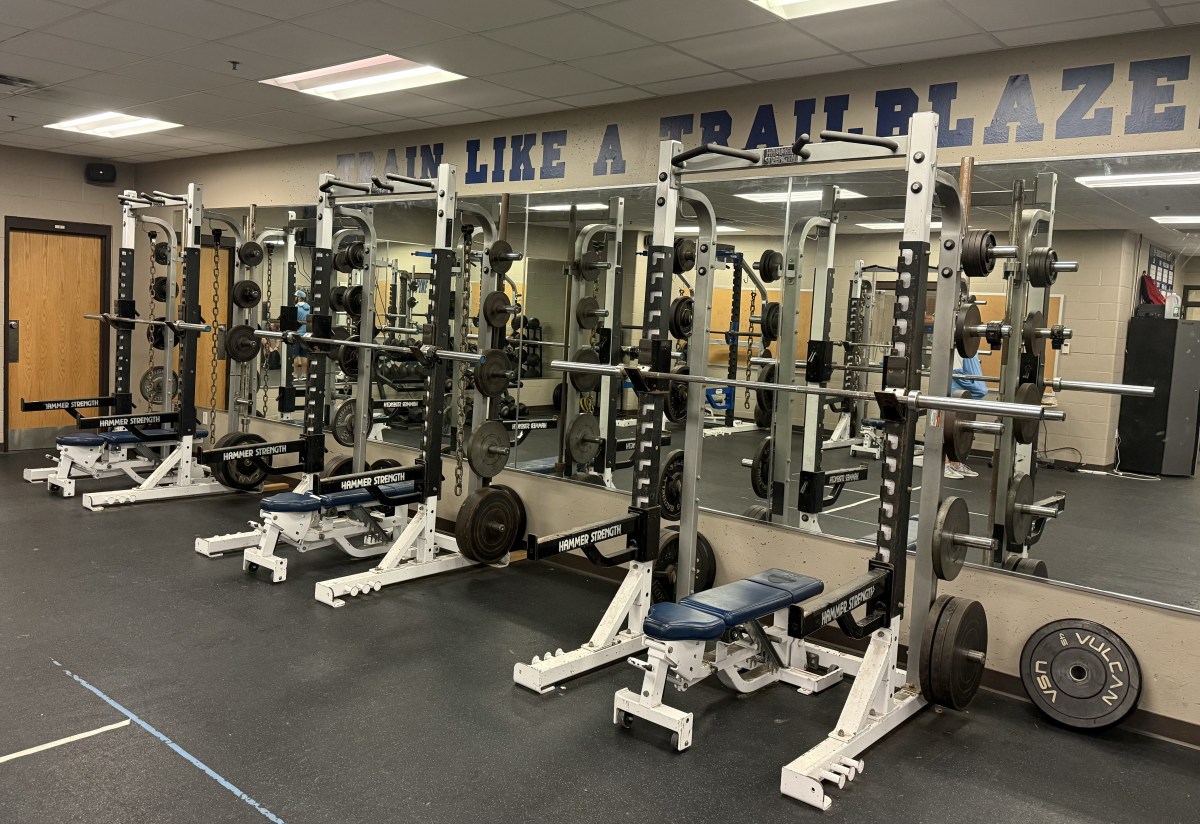
Building the Foundation in the Weight Room: Stability and Range of Motion

When most people think about the weight room, they picture heavy barbells, big lifts, and chasing personal records. And while strength is important, there’s a deeper, often overlooked element of training when high school/younger athletes are first introduced or attack the weight room with minimal structure: stability and range of motion (ROM). If you want to unlock your potential—as a baseball player and in building strength—focusing on these two elements can make all the difference.  

The weight room is about more than moving heavy weight, it’s about moving weight efficiently. Your body is capable of more than you think, but poor mechanics and limited ROM often hold you back. Many athletes struggle with balance and lose connection between the weight, their body and the ground. 

The fix? Commit to improving your movement! Range of motion isn’t just about flexibility or mobility. It’s about teaching your body to move through its full potential while maintaining control. Stability ensures that no matter how deep or explosive the movement, you remain balanced and connected. The greatest opportunity to improve your movement is through a proper, focused warm up that emphasizes these two points.

The ultimate goal in the gym isn’t just about how much weight you can move. It’s about how fast, explosively, and efficiently you can move it. Think of your training as a foundation:  

  1. Stability comes first. Before chasing a deeper ROM, ensure you have the stability to control the movement. Staying connected to the ground at all times is key.
  2. Range of motion maximized through control. Don’t sacrifice stability for depth. Controlled, full-range movements set the stage for power.  
  3. Explosiveness ties it all together. Once you’ve built a stable and efficient foundation, you can focus on generating speed and power. This is what turns weightlifting into game-changing performance. 

Stability + Full ROM = Explosiveness

Here’s the thing: baseball demands stability and efficient movement too! Every pitch and swing relies on your ability to have perfect balance through the entire motion with no imbalances or counterbalances. Sound familiar? These are the exact skills you’re refining when you focus on stability and ROM in the gym. 

The mechanics you’re developing in your lifts—balanced, controlled, and explosive movements—translate directly to your game. It’s no coincidence that the same areas where many athletes struggle in the gym (balance, control, efficient ROM) are also weaknesses on the field. If you can learn to move well here, you’ll carry that movement quality into every aspect of your baseball performance.  

The time you invest in mastering stability and ROM now, in the winter, will pay dividends come spring. Every lift, every rep is an opportunity to refine your mechanics, improve your efficiency, and lay the groundwork for better performance on the diamond. So next time you’re in the weight room, don’t just think about the weight on the bar. Think about the quality of your movement. Think about how what you’re doing today will translate to your next swing, throw, or sprint.

Categories
Blogs

Why Every Baseball Player Should Watch the Postseason

The MLB postseason is more than just an exhilarating display of talent—it’s a masterclass in the fundamentals of the game. With every pitch, at-bat, and play under a microscope, the smallest details become the biggest difference-makers. Pitchers aren’t just throwing—they’re executing precise game plans, hitting spots, and mixing pitches to outsmart hitters in the highest-pressure moments. For young players looking to elevate their game, watching the postseason is an opportunity to learn firsthand how professionals thrive by doing the basics right. 

In the postseason, management styles shift dramatically compared to the regular season. There’s little room for error, and every pitch is magnified. Starters are on a much shorter leash—managers aren’t afraid to have relievers ready to go as early as the first inning if they sense trouble. It’s not uncommon to see a starting pitcher dominate through five innings only to be pulled for a fresh arm, regardless of their pitch count. This heightened intensity forces pitchers to maintain pinpoint control because something as small as a leadoff walk can end their outing. It’s a relentless, chess-like approach where the best strategy is one that leaves no room for uncertainty.

That’s why it’s important for pitchers to execute the fundamentals. Those who can consistently do so are the ones who stay on the mound longer and give their teams a chance to win. Here are a few fundamentals that I have recognized this postseason as key contributors to doing so:

  • Getting ahead of hitters with first-pitch strikes sets the tone, forcing batters into defensive counts and allowing pitchers to expand the zone
  • Avoiding walks is crucial; free passes often lead to trouble, especially in games where every base runner is a potential game-changer
  • It’s not just about what happens at the plate—holding runners close and disrupting their timing can prevent stolen bases and keep the defense in control

Just watching the first round of Wild Card games, you saw outings from Tarik Skubal, Corbin Burnes and Cole Ragans, who executed over 80% first pitch strikes and walked a combined two batters. Watch highlights from those outings because there is so much to learn from them.

I could go into all three of the pitcher’s outings, but Skubal’s specifically was an absolute masterclass. He executed four pitches for strikes early in counts allowing him to later expand with elevated fastballs or changeups below the zone with two strikes, keeping Astros hitters off balance. He also stood strong to his fundamentals in leverage situations, getting ahead and holding the Astros to only one hit in eight at bats with runners on base. It proves that pitchers who master these fundamentals are the ones who thrive, even in the heightened pressure of October baseball.

You also saw the opposite side of the spectrum hold true, even in smaller sample sizes. The Pete Alonso go-ahead home run against Brewers’ closer Devin Williams was set up by two separate fundamental failures: walking the leadoff hitter, Francisco Lindor, and giving up a two strike hit to Brandon Nimmo. While both of those mistakes would not be dooming by themselves, the Brewers were punished by Alonso’s home run and their season ended after that inning.

The MLB postseason is a showcase of the sport at its highest level, where the difference between winning and losing often comes down to a pitcher’s ability to execute the fundamentals. Watching how professionals handle these situations provides young pitchers with a blueprint for success. The postseason is more than just thrilling baseball—it’s an educational experience that reveals how mastering the fundamentals can lead to dominance on the mound and ultimately, victory for the team.

If you’re a pitcher looking to elevate your game by mastering these fundamentals, I can help you develop the skills necessary to thrive in any situation. Reach out to learn more about my coaching and how we can take your performance to the next level.

Categories
Blogs

Mastering Your Throwing Routine: Mechanics, Focus, and Feedback

The quality of your throwing session or catch play is dictated by your ability to execute a proper throwing progression, starting with your very first throws. Every throw counts – whether you’re gearing up for a game, throwing a bullpen, or participating in a recovery day session. A well-structured throwing routine not only helps prevent injuries but also improves accuracy, arm strength, and overall mechanics. Apply these standards to maximize your potential on the field and set yourself up for success!

Establish Your Mechanics

Your first throws are crucial to set the tone for the rest of your session. Make sure they are focused, controlled and deliberate. Start with low-intensity drills that isolate the upper half at a shorter distance, working all the way to the full range of motion. The ten toes drill, when done correctly, can help you lock in your mechanics.

Locking in your mechanics early on reinforces proper muscle memory and ensures that your arm moves smoothly and efficiently through the correct range of motion. Skipping this step by lobbing your first few throws just to see if the ball will get to your partner leads to poor habits, which will only become harder to correct as the intensity increases. Make those first throws count, and the rest will follow.

Have a Focus

You can make meaningful progress by setting clear goals for yourself with each session. Your goal could be mechanical, building arm strength, working on consistency/accuracy, recovery, refining a particular pitch, or working on multiple objectives. Going into each day with a clear objective gives purpose to your throws. Without a goal, it’s easy to fall into a lull during catch play and waste valuable repetitions.

Before starting your catch play, decide what you want to get out of it. This could be hitting a consistent target, working on a certain mechanical cue, improving arm endurance, or just achieving full range of motion in your mechanics the day after a bullpen or game.

Utilize the Feedback of the Baseball

As you move through your catch play, it’s essential to use feedback from each throw to fine-tune your mechanics and adjust accordingly. Pay attention to the flight of the baseball—whether it’s sailing, cutting, or staying true—as it is a direct reflection of how well you are maintaining your form. A ball that consistently tails to one side or lacks carry can signal issues with your grip, release point, or posture. Use this real-time feedback to make necessary tweaks, ensuring each throw becomes more precise and efficient. By staying mindful of how the ball reacts, you’re not just going through the motions, but rather actively improving with every toss.

In conclusion, every throw in your session matters, from the first warm-up toss to the final throw of the day. Establishing solid mechanics early on, setting a clear focus for each session, and paying attention to the feedback from the ball are key elements to maximizing your development as a player. Incorporate these principles into your routine and you will improve your arm strength, your accuracy, and build the consistency needed for long-term success. Approach each catch play with intention, and you will find that the quality of your work translates into better performance on the field.

Categories
Blogs

Skill’s Biggest Limitation is a Lack of Confidence

Baseball is a challenging game often defined by failure. Needing to master the mechanics of a throw/swing and execute them with high intent during a game makes consistency difficult. While developing tangible skills is demanding, there is a less visible yet equally crucial element: belief and trust in one’s abilities. Regardless of how refined a player’s skills are, a lack of confidence is the skill’s biggest limitation.

Mastering the fundamentals of the game is undeniably important. Understanding the mechanics of the throw, knowing the adjustments you need to make when something feels off and possessing situational knowledge of the game. Learning these comes from countless hours and repetitions with the intent to perfect your skills.

However, belief and confidence are the foundation for execution in baseball. Self-confidence and trust in one’s training and preparation can be the difference between success and failure. I’ve seen many pitchers struggle during games when trying to make an adjustment without confidence. The pitcher will make a mechanical error or miss a spot then, in an attempt to correct it, overthink the next pitch and hope what they’re doing works. While they may know the correct fix, their lack of confidence causes other parts of the throw to break down. 

Uncertainty disrupts the timing and flow of mechanics, leading to inconsistencies in areas that were previously fine. Hoping you will execute is not a strong enough belief for your body to move seamlessly. Full confidence and belief are essential for execution. Purely trusting your mechanics will allow you to perform closer to your best whereas performing with minimal trust or mere hope often leads to subpar results.

Utilizing mental training techniques will help address these psychological challenges. Visualization and positive self-talk are the most powerful tools for building confidence. By visualizing positive outcomes and reinforcing a positive mindset, pitchers can navigate their mechanics with fluidity and precision. 

This process doesn’t have to be complicated or time-consuming. In my pitching lessons, I often implement simple yet effective strategies to help players build mental confidence. For example, I encourage players to take a deep breath and say “I’m the best” out loud before a rep. This brief, yet deliberate positive affirmation helps center their focus and alleviate any hesitation. While this may seem overly-simple, it has a profound impact on reducing nervousness and boosting self-belief. 

Another tactic I use is visualizing success, helping the player create a vivid image of performing successfully. For pitchers, this means visualizing the perfect pitch: feeling the ball in their hand with the ideal grip, working through their mechanics with balance and power, and seeing themselves execute the pitch perfectly. By practicing this mental rehearsal, the pitcher’s brain has seen and understood the blueprint for success. So when it comes to translating the mental image to a physical action, the execution feels more natural and less pressured.

By incorporating such straightforward techniques, athletes can significantly enhance their confidence and performance. The simplicity of these techniques is part of the strength, as they can be easily integrated into training sessions and daily practice without requiring extensive time or resources. The key is genuine belief in their effectiveness. 

Players who cultivate mental resilience and self-confidence can better navigate the pressures of the game and unlock their full potential. By nurturing both their physical and mental abilities, players will achieve greater success on the field.

Categories
Blogs

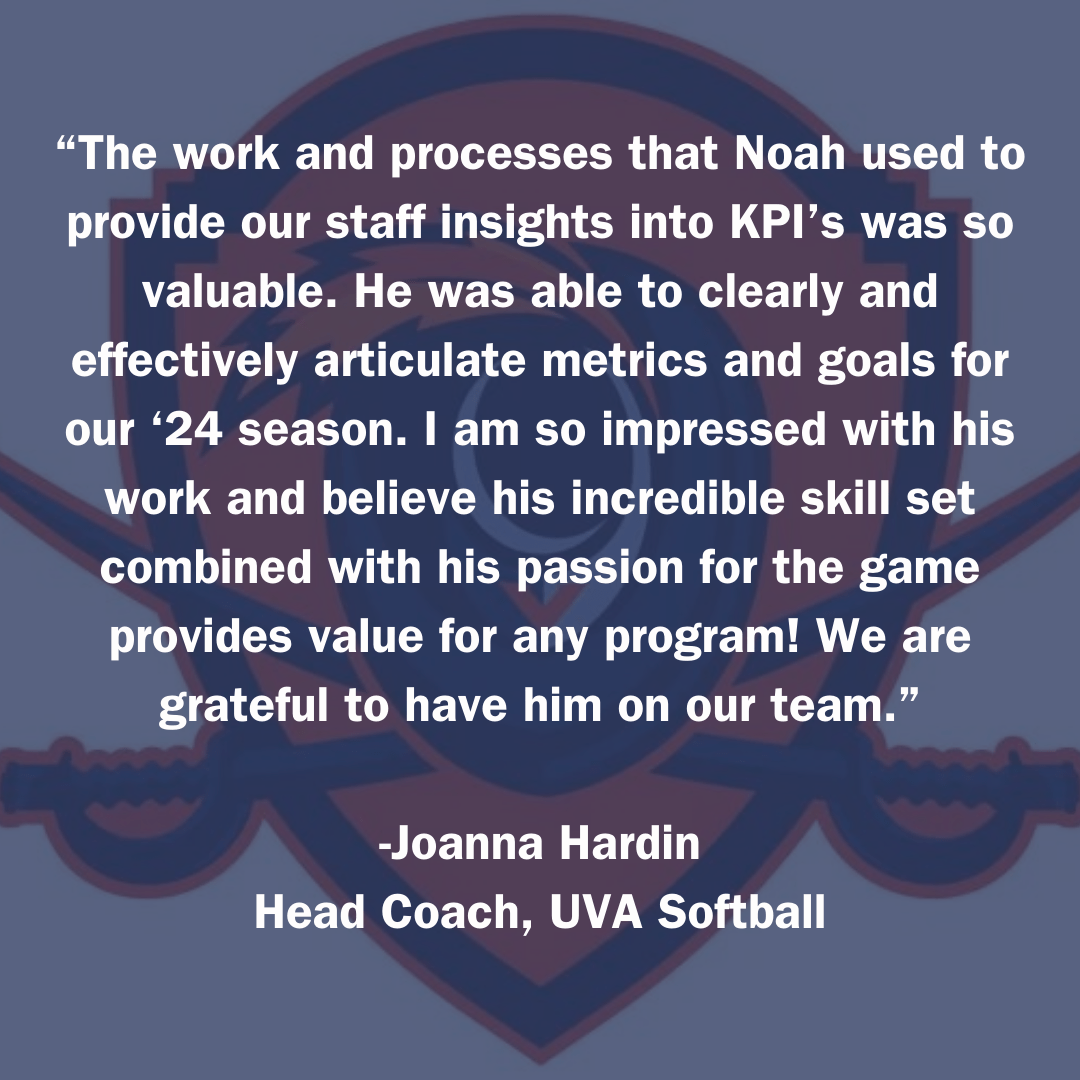
Critical KPIs Guiding UVA Softball on the Road to Regionals

Before the 2024 season, Joanna Hardin, the head coach of the University of Virginia (UVA) softball team, and her coaching staff asked me to help them identify essential Key Performance Indicators (KPIs) that would enhance their chances of qualifying for the NCAA tournament. In 2023, UVA finished 59th in the Rating Percentage Index (RPI) and found themselves on the bubble going into the last weekend of the regular season. The highest RPI team to make the tournament last season was ranked 45th, meaning they were very close. My goal was to provide them with quantifiable statistics that they could use as targets to track their progression throughout the regular season and put them into the postseason conversation.

The Process

To start, I compiled data available publicly online, focusing on conferences that included schools ranked within the top 45 in the 2023 RPI. I collected all offensive, defensive and pitching metrics available. I repeated this process for the 2022 season but not for 2020 or 2021 because of COVID and its effect on those seasons. I decided that the two most recent seasons were the most comparable to the upcoming 2024 season.

From there, I ran individual correlation analysis between winning percentage and the statistics I gathered independently. While the goal of the analysis is based around RPI, correlating statistics to a ranking would lead to inconsistent results. The RPI ranking consists of multiple statistical components including a team’s winning percentage, strength of schedule (SOS) and their opponent’s strength of schedule. Out of those components, winning percentage is the sole statistic completely within the team’s control. 

I opted to assess winning percentage against per-game statistics to mitigate any imbalances stemming from variations in the schedule. Here were the notable results of the analysis:

Takeaways

Seven different offensive categories and four pitching categories showed a strong correlation during the analysis. Since runs determine who wins or loses, it makes sense that a majority of the highest correlating statistics are based around that. I found another statistic of interest: BB ratio. This statistic consisted of dividing walks taken by walks surrendered. My hypothesis is that teams who won the free bases battle would win more ball games. This statistic proved to have a moderately strong correlation. 

One interesting takeaway is the limited correlation between winning and fielding percentage. The lowest fielding percentage for a NCAA tournament team was .957, which was only .017 higher than Memphis, who was ranked at 226. While this statistic gives a very holistic overview of defense, it does not discredit its importance in any way. There’s more to a defense than “not making errors,” so this should be taken with a grain of salt. If I had access to more advanced fielding metrics, such as Outs Above Average, I believe there would have been a stronger correlation.

Another interesting takeaway is the significance of R/BR: Runs to Base Runners. This calculation divides the total runs scored by hits, walks and hit by pitches. I added this statistic because I wanted to tie getting runners on base and scoring. It’s one thing to get on base (OBP is a very important statistic), but can you score the runners? The best team’s the last two seasons were scoring over 50% of their runners that reached base, showing their ability to string hits together and put pressure on the opposition’s defenses. Struggling teams scored only 40% of their baserunners, making them more susceptible to strikeouts and weak contact. If a team gets 10 base runners per game, that’s the difference of one run each time out.

UVA Softball

After finding the statistics with significant correlations, I analyzed UVA’s 2023 performance against the 33 Power 5 programs in the top 45 RPI. While the correlation analysis was done against the winning percentage, the task was to find KPIs that enhance their ability to get into the NCAA tournament. Notre Dame, with an RPI of 45, was the highest ranked team to receive an at-large bid in 2023, thus setting the ceiling. 

Only using Power 5 schools speaks to the other two components of RPI: SOS and opponent’s SOS. Power 5 schools have a more comparable SOS across the board, primarily due to the strength of their conference schedule. The lowest SOS for a Power 5 school in the top 40 RPI was 46 (Indiana University), compared to a 172 SOS for a mid-major (Boston University).

Through this process, I was able to analyze and devise a set of KPIs for UVA. Using the correlation analysis, the KPIs and statistics provided proved to be consistent with what needs to be accomplished to reach the NCAA tournament. 

I conducted an extra analysis evaluating UVA’s performance against those KPIs from the previous season. This assessment highlighted their primary areas for improvement and outlined strategies for addressing them to align with the objectives set for the 2024 season. For instance, in 2023, UVA lagged behind by 0.5 runs in meeting the runs per game KPI that I had established. They scored around 44% of their base runners with the help of their team’s unselfish offense approach and fearlessness on the basepaths, exemplified by an impressive 99 stolen bases last season.

The primary focus for improving their runs per game lies in their ability to get runners on base. Getting on base consists of either collecting hits or free passes. Although they ranked 4th in walks per game in the ACC, the major potential for improvement lies in increasing their hits. A strategic aim to add just one more hit or walk per game, while maintaining the same efficiency in scoring baserunners, could position them perfectly to meet their KPI targets.

——–

In conclusion, the correlation analysis provided valuable insights into key factors that correlate to success. As UVA looks to make their push to the 2024 NCAA tournament, defining KPIs offer a roadmap for strategic improvements and targeted training. I want to thank the coaching staff of the University of Virginia for their collaboration and willingness to explore a data-driven approach. Their curiosity and openness to incorporating data into the coaching process demonstrates a commitment to excellence. I look forward to watching them succeed in 2024!